Showing posts with label optimism. Show all posts

Saturday, August 12, 2023

A Path to Eudaimonia (Fulfilling Life)

(Today, I discussed with a simulation of the philosopher Zizek, in ChatGPT, and came to these conclusions.)

The Path to Eudaimonia: Navigating the Labyrinth of Fulfillment

Authenticity: Embrace Your True Self. Authenticity beckons us to peel away the layers of societal expectations and confront the discomfort of facing our true desires. It's about unmasking the performer within us and embracing the person we are beneath the roles we play. By pursuing our passions and interests without pretense, we align our lives with our inherent authenticity.

Engagement: Immerse Yourself in the Moment. Engagement is the art of being fully present in every endeavor. It's about embracing challenges and responsibilities with vigor, transcending the mundane routines that often numb our experiences. By immersing ourselves in tasks, we infuse life with meaning and vitality.

Meaning: Discovering Purpose Beyond the Self. Meaning lies in transcending our individual needs and aligning with a larger narrative. It's about seeking causes, relationships, and pursuits that resonate deeply with our values. By connecting to something beyond ourselves, we infuse our lives with a sense of purpose that transcends the ordinary.

Connection: Forging Bonds of Humanity. Connection underscores the essence of our shared existence. It's about building relationships that extend beyond superficial interactions. By engaging in empathetic conversations and fostering genuine connections, we remind ourselves of our shared humanity and create a support network that enriches our lives.

Reflection: Delving into Self-Awareness. Reflection invites us to venture into the recesses of our minds. It's the practice of questioning our thoughts, emotions, and motivations, fostering self-awareness. By regularly contemplating our goals, achievements, and desires, we gain clarity and direction on our journey.

Acceptance of Contradictions: Embracing Life's Complexity. Acceptance of contradictions recognizes the intricate dance of life's tensions. It's about understanding that life is a tapestry woven from opposing threads. By acknowledging these complexities and learning to find harmony in the discord, we navigate challenges with grace and resilience.


***


Dealing with Challenges: A Mindset for Eudaimonia

In the face of challenges, this mindset serves as a compass, guiding us towards eudaimonia:

Integrate Authenticity and Meaning: When challenges arise, anchor yourself in your authentic desires and values. By connecting difficulties to what truly matters to you, you infuse them with purpose and make them stepping stones rather than stumbling blocks.

Engage and Reflect: In moments of adversity, engage actively and reflect on your responses. Immerse yourself fully in the challenge while maintaining a balanced perspective. Reflect on how the experience aligns with your journey toward eudaimonia.

Embrace Complexity and Connection: Challenges often come with contradictions and uncertainties. Embrace these complexities, for they are inherent in the human experience. Seek connection with others during difficult times, for shared experiences can provide solace and perspective.

In this way, by weaving together authenticity, engagement, meaning, connection, reflection, and acceptance of contradictions, you craft a roadmap for both the pursuit of eudaimonia and the navigation of life's challenges. Remember, this journey is a dynamic process unique to each individual, and it's through this very journey that we uncover the essence of a fulfilling existence.

Sunday, August 28, 2016

Our Culture Is Not For Sale

1.

As I drove on the highway today, I began to realize something. I realized that billboards are lining the highway almost all the way through. Most of these billboards are ugly, although they advertise beauty products. Some are offensive (with terrible innuendos). But what all of them did is to obstruct the scenic view of the countryside, distant trees, clouds and mountains. How awful! Aren't we disgusted with such gross commercialization of our public space? 

This is not a new problem for this country - regardless if anyone ever saw it as one. The intrusion of our public space by the private (sectors, companies, invested persons such as celebrities or politicians) by propping up advertisements almost everywhere now is only going further everyday. 

It wasn't enough that the train stations are full of posters, the train themselves are completely covered with advertisement - inside and out - and (sadly for some time already) we also hear passenger announcement for the arrival at almost every station accompanied by a jingle of an advertisement. 

Our radio stations too are choked with commercials for almost every song played. 

Some may say that those ads are there for a reason. They occupy space where there's potential that the public can see them and hear them. And their private sponsors often pay a hefty amount to occupy those spaces, or rather to keep other private entities from occupying those spaces. 

And of course, a lot of these public spaces - highway, passenger trains, radio - are privately owned anyway. So of course there isn't anything illegal about putting commercials at these places - or even putting so much of them. 


2.

But I believe as a society, we have the power to change this for the better. The intrusion of the private into our public space is only a small part of a larger crisis in our society - that of our lost national identity. The problem is that our society has never come to a satisfactory consensus of what makes us a nation in the year 2016.

And please spare us the group pose of multi-ethnic Malaysians in traditional clothing as a guise for our national identity in this day and age. Yes, our traditional clothing, dances, music and architecture are our cultural heritage, and we must preserve them by all means. But to portray the Malaysian society today as a group of dancers in traditional clothing is not enough. 

Then who are we? An image comes to mind. That of the Teh Tarik sipping, Roti Canai chewing, football and badminton junkie hanging out under the night sky at a local food stall. But is this the ideal image we would like to portray ourselves?

How about portraying our society with the most exemplary morals, best working and living environment, most ideal cities, roads, and countryside that best suit us in this day and age? 


3.

This is the definition of culture - of having a shared meaning in a symbol. Our 21st century cultural crisis is that we don't have any meaningful shared symbols. And it's a shame. Our multiculturalism should not prevent us from having a shared meaningful experience together. In fact we have more things in common experience that should become the anchors of our unity.

For example, our geography exposes us to plenty of sun, and drenches us with sweat from the heat and humidity of our tropical weather. We must acknowledge this, and encourage our people to find a cost effective and most environmental friendly way of keeping bodies cool. This of course may include a simple solution such as preserving the trees in our cities to act as shades.

Food is another favourite thing of ours - and commonly cited as an example of what all of us can be proud of. But let's go further, and find ways to improve the national diet. Are we aware that our current dietary habit is not healthy? Perhaps enough has been said about the "epidemics" of diabetes and obesity in our society. 

Instead of being satisfied with the tastiest dishes we can make, let us also find out what could be the healthiest of all. A healthier national diet is in fact a desperately needed innovation that would be a leap forward in the right direction for our well being.


4.

To conclude let us go back to our highways - a common experience we all share is to drive through these roads that cut through hills, cross rivers, and bring us from one city to another. Isn't it a great shame that all those scenic view of the countryside, tropical forest, and hills are obstructed by large billboards that sell beauty products? 

Is this what we've become? For the sake of selling the appearance of natural beauty, we've sacrificed the true beauty of our nature.

If we can shape our identity, let's shape it for the better.

Happy Merdeka 2016.


Wednesday, June 6, 2012

Self-Doubt and Consumerism

1. Healthy Self-Doubt

We all need to doubt ourselves at times. Without self-doubt, we may refuse to seek help when we really need one, or we may become complacent with our situation and may overlook our risk of failure. This must already be obvious to us - if not and if we don't doubt ourselves now, something will eventually happen and it would (painfully) remind us of our own limitations. Pray that it won't be too harsh on us.


2. Pathological Self-Doubt 

What really interest me is when there is too much self-doubt. Unfortunately, I cannot give any advice on how to overcome this - you may know better than I do. Here I'm only interested in discussing how we can be exploited when we doubt ourselves too much


3. Buying Promises

I think Nike really got it when they came up with their tagline: "Just Do It". Yes, we get inspired by this adage by Nike that when we face a difficult task, we can remind ourselves to "just do it". On the other hand, behind this simple branding slogan we find the true nature of big brands: what we really buy from them are not their products (e.g shoes, bags, phones, etc), but promises of better chances in life.

It's not that Nike is telling us to 'Just Do It' - "It" being "Buy our products". Instead, by having this phrase associated with their brand, I think they really are saying that we can 'Just Do It' - 'It' being 'even the most impossible things' - if we own Nike products. This may seem more obvious when we look at other brands and products.

Lately I have noticed that smartphone ads before the screening of a film in the cinema have been more and more to do with people using the phone for the most trivial things. One of these adverts has a 'photography student' using a smartphone to do a fashion shoot while sky-diving! "Oh, nice. If I get that phone I can do that too". Maybe that wasn't the point of that advert. Its subtle message is that I can do even the most impossible things when I own that smartphone. Nice.

In fact, this advertising trick is not new. Think about all those alcohol ads with seemingly unrelated contents and old cigarette ads with healthy macho cowboys. "You drink and you can do the trivial things in life". "You smoke and you can live a free life and ride a horse all day". And of course, this also applies to lottery tickets, like what I read from this article.


4. Wants and Needs

When we advise children about spending money we like to tell them to keep their wants and needs apart. We advise them to prioritise spending more on their needs and not waste too much on fulfilling their desires. Is this advice good enough for them?

Maybe we should also advise them on the balance of having self-confidence and self-doubt. "Too much confidence will eventually land you into trouble. But if you have too much self-doubt, you can be exploited by empty promises." And yes, tell them, "Owning the latest gadget won't guarantee to make you more creative. Trust your own intelligence, and you can be creative and produce a masterpiece even with just pen and paper".

Monday, May 21, 2012

What's Left to Explore?

Are we approaching the end of new discoveries? We can now locate almost everything on this planet on Google Maps; string theory, which may be the theory of everything, has already been proposed; touch screens and electric automobiles are being mass produced; and almost all species of living organisms have already been documented. But if one were to ask me, so what's there left to explore? My answer: Everything, again. 

I think we would only deceive ourselves by mixing access to knowledge, with knowing itself. Even with the fastest and easiest access to a wealth of knowledge (on websites like Wikipedia), without reading and understanding these resources we would be no more enlightened than our grandparents who've never had such conveniences. The fact is that your grandmother is a better cook than you - yes, because she has more experience in cooking. But she would have learned how to cook from her mother, or peers, who would have limited knowledge on cooking than what we have access to today: Youtube cooking videos.

Nevertheless, thousands of Youtube videos and websites on cooking won't make you a better cook. Only after you have seen, read and practised those cooking techniques and recipes, then only you'd be a good cook. This is why it is important to distinguish access to knowledge, with knowing itself. The fact is, we have so many things to explore for ourselves today that it's just mind-boggling even to think about simple things like how does our computer screen work?

Of course, we can't all be expected to learn nuclear physics, or study genetics - we all have other things to do. We would assign the task of exploration to explorers: researchers in their respective fields. And we may admit any new discovery to be an achievement for all mankind. 

Mankind may have already made many great discoveries, but are these the ultimate truths?* That's something for each of us to explore. 


*What? It's easy to imagine questioning the truths of scientific theories, etc. But how do we question the 'ultimate truths' of modern technology? Isn't the fact that these machines can function is enough to make us believe that they are 'true'? Actually there is another important question to ask about modern technology, that is if they are so good, why do they tend to break down so easily? And what would be the solution to this problem?

Sunday, March 4, 2012

Sunday Morning Reflection

Waking up early on a Sunday morning is a great triumph. This is especially true when there's no particular plan for the day. What this means is that I have all this time to myself. If I'm meeting someone later, getting up early gives me more time to be on my own.

We don't get this me-time on weekdays, or later parts of the weekend as they are spent fulfilling our commitments to our job, close friends, and family. And it usually continues throughout weeknights, as our minds would still be bogged down by unfinished jobs and plans for the following day. Don't get me wrong, these are still time well spent, even when they are dedicated to other people. 


What is special about Sunday morning is that, usually by Saturday night, we have fully recovered all our physical and mental energy spent in the past week of hard work. Despite this, we have all day today to ourselves. 

"So what should I do with all this free time?"

We shouldn't be asking ourselves this question. When it comes up to mind, that means boredom will set it soon, if it hasn't already done so. Boredom, is equally suffering to the mind as exhaustion. If in exhaustion we have lost the resources (either physical or mental energy, or time) to lead a satisfying life, when bored, we have lost our direction and purpose to live (despite having time and energy) altogether.

So actually, boredom is a worse condition than exhaustion. No wonder depression is still rampant in our society despite all the conveniences of modern living. In fact, it could be more prevalent as with readily available food, and assistance of technology, we have more free time, but with no clear direction on how to spend our time meaningfully.


Fortunately, I have found what I'd like to do with my time. By reading, reflecting and writing, I can have a million years, and neither boredom nor exhaustion will set in. C'est la vie! 

Tuesday, February 21, 2012

Is This The End?

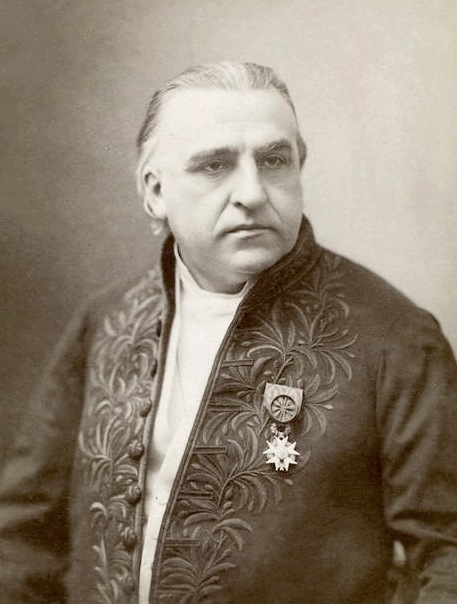
Jean-Martin Charcot (1825-1893)
Father of Modern Neurology
This is my last week of neurology attachment. As a student, over the past five weeks I have been exposed to general neurology, the branch of medicine that deals with diseases of the brain, spinal cord, nerves and muscles. I think a major part of my enjoyment in doing this placement is because of my great interest in how the brain works (who isn't interested in how the brain works anyway?).

Over the last five weeks, I have learned about how things can go wrong in different parts of our brain, and I have seen how this manifests in a myriad of symptoms: funny sensations, electrical pains, terrible headaches, shakes of the hands, twitching of the neck, pumping of the muscles, memory loss, speech impairment, or even blindness with normal functioning eyes!

Surely, I have come far to do this clinical attachment now. I still remember that almost a decade ago (!) we were taught in school the names of the different parts of the brain - cerebrum, cerebellum and medulla oblongata - and we also had to remember their different function. Like everyone else, I was fascinated by their wonderful names and intrigued with the brain itself, but I have never really thought then that one day I would be learning more about the brain!

Well, that is what I am doing now indeed. Looking back to where I come from: a curious child kept busy with school in the mornings, homework in the evenings, piano lesson on Saturdays and TV or cinema on Sundays; even if my life journey ends here, I'm very pleased and satisfied with it. But this is not the end - not yet.

There are two ways of looking at life. Either see it as a journey to reach a certain destination. Or see the whole life itself as a destination: Every new day is a destiny of all the days that have gone past.

Sunday, January 15, 2012

Stupid and Confused

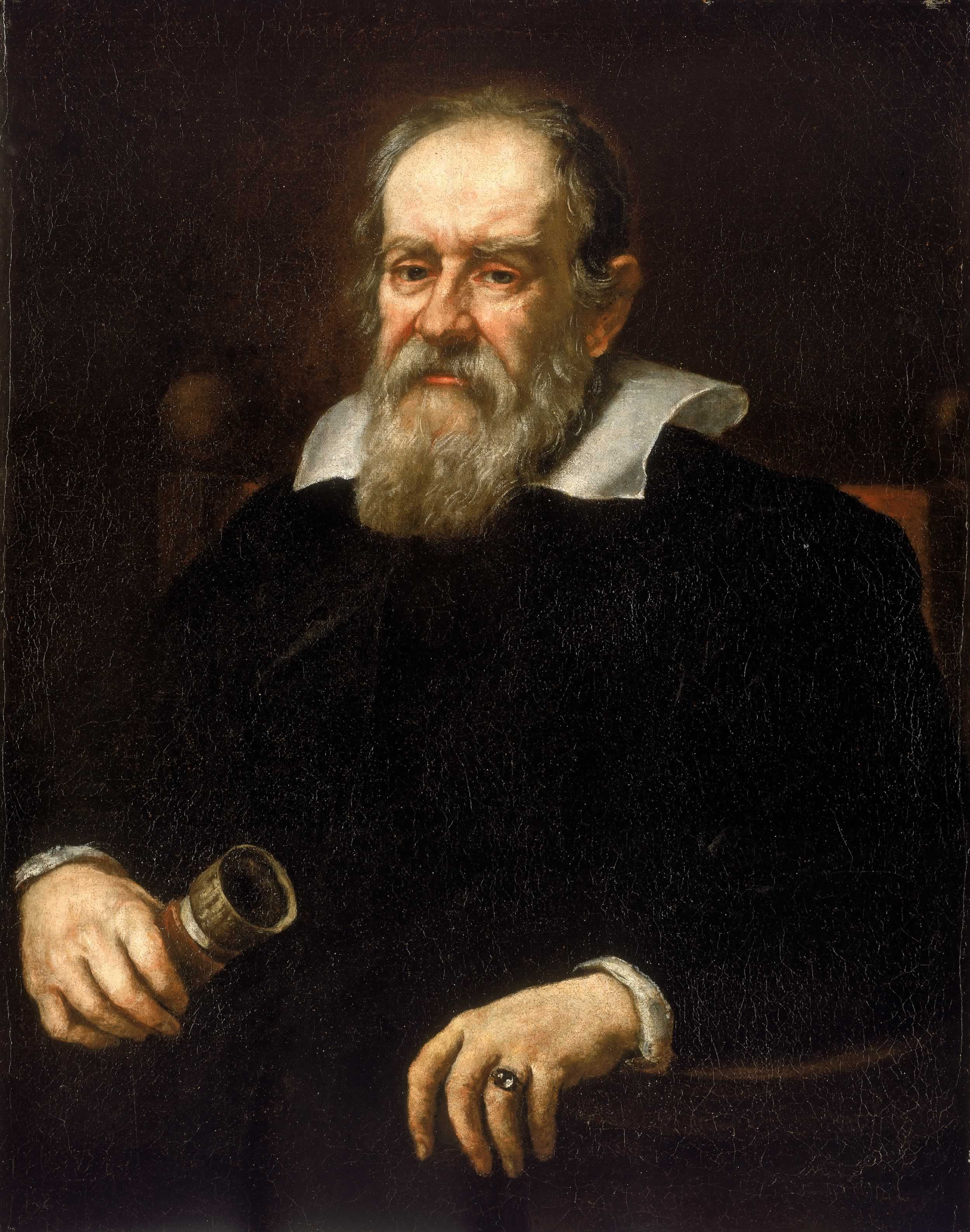
Galileo Galilei wrote in his Dialogue (1632):
And when I run over the many and marvelous inventions men have discovered in the arts as in letters, and then reflect upon my own knowledge, I count myself little better than miserable. I am so far from being able to promise myself, not indeed the finding out of anything new, but even the learning of what has already been discovered, that I feel stupid and confused, and am goaded by despair.

If I look at some excellent statue, I say within my heart: "When will you be able to remove the excess from a block of marble and reveal so lovely a figure hidden therein? When will you know how to mix different colors and spread them over a canvas or a wall and represent all visible objects by their means, like a Michelangelo, a Raphael, or a Titian?" Looking at what men have found out about arranging the musical intervals and forming precepts and rules in order to control them for the wonderful delight of the ear, when shall I be able to cease my amazement? What shall I say of so many and such diverse instruments? With what admiration the reading of excellent poets fills anyone who attentively studies the invention and interpretation of concepts: And what shall I say of architecture? What of the art of navigation?

But surpassing all stupendous inventions, what sublimity of mind was his who dreamed of finding means to communicate his deepest thoughts to any other person, though distant by might intervals of place and time! Of talking with those who are in India; of speaking to those who are not yet born and will not be born for a thousand or ten thousand years; and with what facility, by the different arrangements of twenty characters upon a page!

When the Father of Modern Science humbly admitted (indirectly through a character in his book) that he feels "stupid and confused" that he was far from discovering anything new, or, even further from learning all that has already been discovered; I think he was simply admiring the vast sea of Divine wisdom and knowledge.

Far from shying away from the quest to traverse that sea of Divinity, through the realization of his own limitations, Galileo has gained greater insight into the workings of the universe than others who are full of vanity.  

Tuesday, November 15, 2011

Dante's Destination


As he was growing tired of climbing the steep mountain to reach Heaven, Dante begged his guide: 


"How far we have to journey: for the hill
Mounts higher, than this sight of mine can mount." 


Thus his guide replied:


"Such is this steep ascent,
That it is ever difficult at first.
But more a man proceeds, less evil grows.
When pleasant it shall seem to thee, so much
That upward going shall be easy to thee
As in a vessel to go down the tide,
Then of this path thou wilt have reach'd the end.
There hope to rest thee from thy toil." 


Then as they continued their journey, at one point, Dante suddenly realized that his steps were getting lighter and easier to take. He asked:


"Say, master, of what heavy thing have I
Been lightened, that scarce aught the sense of toil
Affects me journeying?"


His guide then answered him: 

"When sin's broad characters, 

that yet remain upon thy temples, 
though well nigh effaced, shall be, as one is, all clean razed out,
Then shall thy feet by heartiness of will be so overcome, 

they not alone shall feel no sense of labour, 
but delight much more shall wait them, 
urged along their upward way."


-----
Quotes from Divine Comedy by Dante (1265-1321)

Monday, August 15, 2011

One Year Abroad

It's almost unbelievable. 
I have already spent one year away from home. 

Then again, I have never truly left home - it is where I am. 

Of course I love my family, and I do miss them.
It's been a year since we last hugged and kissed each other. 
I also miss my friends whom I have not met for a year and I'd love to spend time with. 
But I'm not saddened by these thoughts.

That's because love is not mere hugs and kisses. 
Love is not mere company and embrace. 
Love is the sacred bond that traverses infinite space and time. 

Love is not to be returned. 
It can only be initiated.

Monday, July 4, 2011

Not a Morning Person? This Quote Might Help

     " In the morning when thou risest unwillingly, let this thought be present- I am rising to the work of a human being. Why then am I dissatisfied if I am going to do the things for which I exist and for which I was brought into the world? Or have I been made for this, to lie in the bed-clothes and keep myself warm?- But this is more pleasant.- Dost thou exist then to take thy pleasure, and not at all for action or exertion? Dost thou not see the little plants, the little birds, the ants, the spiders, the bees working together to put in order their several parts of the universe? And art thou unwilling to do the work of a human being, and dost thou not make haste to do that which is according to thy nature?- But it is necessary to take rest also.- It is necessary: however nature has fixed bounds to this too: she has fixed bounds both to eating and drinking, and yet thou goest beyond these bounds, beyond what is sufficient; yet in thy acts it is not so, but thou stoppest short of what thou canst do. So thou lovest not thyself, for if thou didst, thou wouldst love thy nature and her will. But those who love their several arts exhaust themselves in working at them unwashed and without food; but thou valuest thy own own nature less than the turner values the turning art, or the dancer the dancing art, or the lover of money values his money, or the vainglorious man his little glory. And such men, when they have a violent affection to a thing, choose neither to eat nor to sleep rather than to perfect the things which they care for. But are the acts which concern society more vile in thy eyes and less worthy of thy labour? " 
Marcus Aurelius
Meditations (written in 167 AD)

Saturday, June 25, 2011

Why the Movie SENNA is Rated 100% Fresh

Let me re-quote Joseph Campbell (I've done this beforetwice!) from his revolutionary work, The Hero with a Thousand Faces, to show you that Senna has what all the best movies have in common: a familiar plot about the hero as deftly described by Campbell in that book.  If you've watched Senna, you'd know what I mean.

The mythological hero, setting forth from his commonday hut or castle, is lured, carried away, or else voluntarily proceeds, to the threshold of adventure.
There he encounters a shadow presence that guards the passage.  The hero may defeat or conciliate this power and go alive into the kingdom of the dark (brother-battle, dragon-battle; offering, charm), or be slain by the opponent and descend in death (dismemberment, crucifixion). 
Beyond the threshold, then, the hero journeys through a world of unfamiliar yet strangely intimate forces, some of which severely threaten him (tests), some of which give magical aid (helpers). 
When he arrives at the nadir of the mythological round, he undergoes a supreme ordeal and gains his reward. 
The triumph may be represented as the hero’s sexual union with the goddess-mother of the world (sacred marriage), his recognition by the father-creator (father atonement), his own divination (apotheosis), or again - if the powers have remained unfriendly to him – his theft of the boon he came to gain (bride-theft, fire-theft); intrinsically it is an expansion of consciousness and therewith of being (illumination, transfiguration, freedom). 
The final work is that of return. If the powers have blessed the hero, he now sets forth under their protection (emissary); if not, he flees and is pursued (transformation flight, obstacle flight).
At the return threshold the transcendental powers must remain behind; the hero re-emerges from the kingdom of dread (return, resurrection).  


The boon that he brings restores the world (elixir).


Essentially, we all want to be told the same old story again and again.

....

Wednesday, June 15, 2011

100 Before Graduation

The complete list by guardian.co.uk 


Well at least I have done five, 95 to go!

Friday, May 27, 2011

Curiosity Doesn't Kill

Life is not about the search for the right answers. If it is, then all advisors, experts, like scientists and fortune-tellers are grossly overpaid - they give too many wrong answers. 

For instance, none of the experts were able to warn us on the financial crises, and, despite the complex mathematical models and fancy economic theories, our cost of living is still skyrocketing. Also, even after ages of weather forecasting, we are not capable to accurately predict and avoid natural catastrophes and there are still thousands of casualties in tornadoes, floods, tsunamis, etc. Plus, we get asked to pay so much for talks that tell us how to get rich, although despite this, we'd still be trying to make ends meet; or we could buy countless books to teach us how to live, and still cry silently at our misfortunes.

So is it wrong to find the right answers? No. What is wrong is to make life all about getting the perfect answer. What makes a person wiser is not what he knows, it's what he can ask about. And that's why I believe life is about the search for more questions. 

Think about it. Physicists (and most people) have always been longing to find the Theory of Everything, but what they truly dream of is beyond that - unimaginable mysteries out there waiting to be discovered, if only we knew the Theory of Everything.

Before Al-Khwarizmi 'discovered' the algorithm, no one could have possibly thought about applying the method to create new technology like the computer - what more to imagine the Internet, or, Facebook! It's impossible to tell where our discoveries can bring us to.

Curiosity did not kill the cat. A curious cat may die of a tragic accident, but the dull cat that survives may live to never discover its own life's potentials. 


It's good to learn something new; better, to understand it; best, to ask new questions from that understanding. 

Wednesday, May 18, 2011

The Neutral State of Mind


I finally got a jolt of reality from the exams briefing today that I have two months before my finals, so I really need to start working hard for it. Is there enough time for me to do my revision? Should I worry that I might fail if I'm still not prepared come July? 

I hate to worry about anything because it's counterproductive. But of course, one cannot be too complacent either. So where is the balance, to get worried or to be complacent? 

Don't worry. Like the diagram above shows: whatever the circumstances, there's never a reason to worry. Yes, you can argue that our worry can nudge us towards making a real effort on solving a problem. That's a fair point.

However, I believe it's never good to do something just because we worry about the consequences of not doing it. It's much better if we choose to do something out of interest - however absurd and far-reaching as it may sound - even when it comes to very demanding tasks like work and study. So hey, let's do something because we want to. That's true bliss!

Sunday, March 27, 2011

Halfway There

Can we truly be halfway anywhere? I'm halfway through my 50 book challenge this year (and it's still March), so should I stop reading after my fiftieth book? I'm halfway through my medical course (there's a halfway dinner this Friday), so should I stop studying medicine after my graduation? 

The most recent book I read, The Age of Absurdity by Michael Foley is about why it is becoming harder for us to be happy in our modern age, and one of the answers he found was the illusion of potential. We see this almost everyday, everywhere: Buy 'this', it is good for you (substitute 'this' with phones, laptops, cars, houses, clothes, books, holiday trips, college degree, love, marriage, power etc.).

The point he was making, I think, was that we must not be fooled by the illusion of easily becoming happy, satisfied, and fulfilled by merely owning those items. In fact, it is as likely that we become un-happy, un-satisfied and un-fulfilled when we get things like a new phone, car, trip etc. This dissatisfaction worsens as we get bombarded with adverts which suggest even more potential from buying newer products.

However, I'm not trying to ask anyone to consider dispensing the purchase of anything, or disbelieve the potential of everything. No, what I suggest is that we should appreciate our current predicament - Happiness is not about having what you want, it is wanting what you have. Instead of whingeing (read:complaining) and keep asking for more, let's be rational and consider what's best for us to do now, based not just upon the potential these things purport to bring us, but also on our current status (Is my phone/car/laptop working well enough for now?).

In other words, do not dwell too much on the potential of stuff - like, say what my medical degree, or reading 50 books - might bring us. What drives us to work/study/live should not be  the 'potential' of future happiness. We should work/study/live for the sake of working/studying/living - because we want it, like it, enjoy it, deserve it.

Of course, in due time, we will eventually discover the potential of doing/owning things naturally; and be fulfilled, happy and satisfied - in reality, not fantasy. So, to answer my first question: No, I'm not halfway there. I'm here.

Saturday, January 22, 2011

50 Book Challenge


‘The first step towards the attainment of real discovery was the humiliating confession of ignorance.' 
Sir Humphry Davy (1778 - 1829)


And so I humbly admit my ignorance. Even if I will fail to achieve the Romantic ethos of 'real discovery', I strongly hold that there is still much to learn from what others have already discovered. From Archimedes to Newton; Smith to Keynes; Cook to Armstrong; Hippocrates to Jenner. Great men and women have long toiled to unravel the mysteries, disprove false beliefs, and ultimately, enable us to understand a little more about our life and the Universe we live in.
  
I challenge myself to read 50 books this year - a tall order especially while studying medicine, but not impossible - hoping to understand what these great people have long did. Yes, I'm treading a road already taken by others - by merely absorbing second-hand knowledge. But to follow the steps of Sir Davy towards making a real discovery, I shall begin with a 'humiliating confession of ignorance.'

...
Find out the 10 best books I read in 2010.

Wednesday, January 12, 2011

Medina Zara Ng


Spread your wings
and fly.
This world is a wild place
but don’t be discouraged to find
the love from others,
the wonders of Nature,
and your dreams fulfilled.
I’m thousands of miles away
from embracing you on your Birthday
but the news of your good health
brings endless joy to my heart!


Hakim J
...

Wednesday, November 24, 2010

Tuesday, July 20, 2010

We Must Try Harder

On the first week of July, Tun posted an entry on Che Det, urging Malaysians to support local inventors and innovators by investing more capital and confidence into these local projects - as neatly summarized in his last paragraph:
The Government, the civil servants, the business community need to change their mindsets if Malaysia is serious about research and development.

According to him, most of us make up excuses not to invest into our local inventors and innovators, and feeling frustrated, some of these local inventors came to see him to demonstrate their products.


As I have said in my reply to that post, we must first understand that inventions and innovations get turned down everyday all around the world. That means, we in Malaysia are not unique in the response of our society to new products of invention. Below is a video about Google Wave (an ambitious project by Google to replace the traditional email system):


You can see how promising this new technology, Google Wave really is. And I wonder, why are we still not using it by now? (Note: I was very optimistic about Google Wave, and I'm quite disappointed that it is still not in practical use) This is only one of the many examples of failed inventions in the West.

Did you know that the British Royal Navy in mid-nineteenth century was once appalled by the advent of steam and also ignored the invention of the telegraph? Of course, it turned out that these two technologies, along with several others were the fuel of their rise to power.

So instead of blaming our mindsets for the failure of our local invention and innovation, we must encourage our inventors and innovators to never lose faith and try harder to develop their products and market them. They must have a strong heart in order to succeed, in a spirit of determination popularized by Thomas Edison when he said:
I have not failed. I've just found 10000 ways that won't work

Of course, it is much easier for me to quote somebody than to actually do all the research work and develop new technology. But I strongly believe that we can go further than just repeating cliches about Malaysians denigrating all things Malaysian. This is a myth, I think.

Above all, we are no different from the people in America, Britain, Germany, Japan, China, Korea, Singapore, Africa, and everywhere else around the world. If something is good, practical and useful, it doesn't matter if it's American, British, German, Japanese, Korean, Chinese or Malaysian, every intelligent person in the world would like to have it.  

About Me

My photo
Medical practitioner. Amateur philosopher, pianist and composer.