Showing posts with label stoicism. Show all posts

Saturday, August 12, 2023

A Path to Eudaimonia (Fulfilling Life)

(Today, I discussed with a simulation of the philosopher Zizek, in ChatGPT, and came to these conclusions.)

The Path to Eudaimonia: Navigating the Labyrinth of Fulfillment

Authenticity: Embrace Your True Self. Authenticity beckons us to peel away the layers of societal expectations and confront the discomfort of facing our true desires. It's about unmasking the performer within us and embracing the person we are beneath the roles we play. By pursuing our passions and interests without pretense, we align our lives with our inherent authenticity.

Engagement: Immerse Yourself in the Moment. Engagement is the art of being fully present in every endeavor. It's about embracing challenges and responsibilities with vigor, transcending the mundane routines that often numb our experiences. By immersing ourselves in tasks, we infuse life with meaning and vitality.

Meaning: Discovering Purpose Beyond the Self. Meaning lies in transcending our individual needs and aligning with a larger narrative. It's about seeking causes, relationships, and pursuits that resonate deeply with our values. By connecting to something beyond ourselves, we infuse our lives with a sense of purpose that transcends the ordinary.

Connection: Forging Bonds of Humanity. Connection underscores the essence of our shared existence. It's about building relationships that extend beyond superficial interactions. By engaging in empathetic conversations and fostering genuine connections, we remind ourselves of our shared humanity and create a support network that enriches our lives.

Reflection: Delving into Self-Awareness. Reflection invites us to venture into the recesses of our minds. It's the practice of questioning our thoughts, emotions, and motivations, fostering self-awareness. By regularly contemplating our goals, achievements, and desires, we gain clarity and direction on our journey.

Acceptance of Contradictions: Embracing Life's Complexity. Acceptance of contradictions recognizes the intricate dance of life's tensions. It's about understanding that life is a tapestry woven from opposing threads. By acknowledging these complexities and learning to find harmony in the discord, we navigate challenges with grace and resilience.


***


Dealing with Challenges: A Mindset for Eudaimonia

In the face of challenges, this mindset serves as a compass, guiding us towards eudaimonia:

Integrate Authenticity and Meaning: When challenges arise, anchor yourself in your authentic desires and values. By connecting difficulties to what truly matters to you, you infuse them with purpose and make them stepping stones rather than stumbling blocks.

Engage and Reflect: In moments of adversity, engage actively and reflect on your responses. Immerse yourself fully in the challenge while maintaining a balanced perspective. Reflect on how the experience aligns with your journey toward eudaimonia.

Embrace Complexity and Connection: Challenges often come with contradictions and uncertainties. Embrace these complexities, for they are inherent in the human experience. Seek connection with others during difficult times, for shared experiences can provide solace and perspective.

In this way, by weaving together authenticity, engagement, meaning, connection, reflection, and acceptance of contradictions, you craft a roadmap for both the pursuit of eudaimonia and the navigation of life's challenges. Remember, this journey is a dynamic process unique to each individual, and it's through this very journey that we uncover the essence of a fulfilling existence.

Tuesday, April 11, 2017

The Unconscious

Much has been written about the influence of the unconscious in our daily lives - Freud, etc. On first reading one would disregard the unconscious as nonsense; but as one reads further, one almost immediately falls into the temptation of trying to read more into the subject, in hopes of understanding and controlling one's own unconscious forces (or subconscious, if you prefer) to one's own will.

But the unconscious is, after all, unconscious. Any attempts at short circuiting this energy will inevitably fail. There are no 10-simple-rules to improve our lives that will actually work, because the unconscious does not follow our conscious rule.

What if instead of trying to rule over the unconscious, one puts more effort at controlling one's conscious mind. This is what any religious person will tell us to do. The important word here is tell. They can only preach to do this - limit our desires, etc. - even if this will also inevitably fail. Aren't desires also the stuff of the unconscious? Although one can be aware (that is, conscious) of his desire for wealth, fame, etc; one is blissfully ignorant and powerless towards the origin of his desires - that is because they are unconscious.

This is why the divine experience of religious awareness can quickly turn into destructive religious fundamentalism. The fuzzy feeling of cleansing one's own sins (of conscious desires) will come back in the form of other unconscious urges, that may very well be destructive. This fact is obvious even to the religious people themselves, but for them this only happens in other religions. The reason for their blissful ignorance of their own possibility of destructive practices should be obvious now - the unconscious (origin of desires) is unconscious.

There is still great virtue in restraining our desires, urges and appetite. Impatience brings folly, restraint prevents it. However, there must not be an impatience for restraint - as this is where destructive believes and practices come from. For example, it may be enough to keep ourselves away (that is, restrain) from the urge to steal from others. Impatience for restraint will instead impose strict rules such as, "all thieves must be sent to the gallows".  

In biology, there is a theory of homeostasis. It is a system of checks and balances involving many different biochemical structures and substances, only to keep a biological system in equilibrium. Pathology tips this balance one way or another, and result in diseases. Medicine seeks to restore the balance. Reflecting on our own experience as a biological system, it makes sense to maintain the equilibrium to stay in health. The yearn for better lives - more wealth, fame, etc. - should be seen as a natural urge. We must not stay away, or, give in completely to these desires. Rather, we should seek a moderation of the two (a balance of give and take) - seeking wealth and fame, in ways that may also benefit others - only to keep the equilibrium and reach an everlasting peace of our existence. 

Monday, December 31, 2012

New Year's Resolution

   To have everything would make us thankful for nothing,
   To have nothing would make us thankful for everything.


There's always pleasure in achieving whatever it is that we have always wanted - or is there? Let's say we resolve to lose some weight this year. Would it really make us happier to have lost some weight by the end of the year? Or would it be more likely that we get the false reassurance that we could probably lose more weight - so that however much weight that has been lost does not count anymore.

It's good to have a new year's resolution, especially healthy ones, like losing weight, working harder, being nicer to others, etc. However, on reflection, I think it may be wiser to resolve on getting nothing - or to lose everything. Let me explain why.

At first, I thought my resolution is to be grateful for everything in the new year - saying thanks every morning, for every meal and every little achievement. Fortunately I quickly realize how futile this effort would be. Not only will I eventually forget to do it, I also imagine myself forgetting why I wanted to do it in the first place.

In other words, saying thanks - or rather, forcing ourselves to say thanks to every little thing - can turn into an empty ritual. This noble practice would eventually become an insincere habit. So, that's why I think I ought to do the opposite.

Instead of reminding myself to be thankful for everything, it's more practical to do whatever that would make a person do it naturally. And that is, by resolving to have nothing. A poor man's penny is worth much more than that of the rich man.

Of course, I don't expect to lose it all this new year. But that is precisely why I resolve to do so - my failure (to lose everything) would make me happier for another year (as I'll have much more than I ever wanted). However, if fate will be unkind to me, at least I can still be happy that I have achieved my new year resolution.

Happy New Year 2013!

Thursday, September 27, 2012

Futility of Motion

Oh the animals,
they run and seek shelter,
when it rains;

to drink and bathe,
they jump into the water.

The trees,
they stood still,
no matter how wet the weather,
they stood still,
no matter how dry the weather,
they live longer,
and grow ever still.

Wednesday, September 5, 2012

What is Homesickness

At Eternity's Gate (Van Gogh)
Can we recall those moments, when we are reminded of home, in our time away? Though it doesn't happen at all time - neither do these thoughts come to us most of the time - when they do come to mind, we are filled with a feeling, which we call homesickness. But let's go further than this superficial view of homesickness, and delve deeper into an understanding of this feeling of longing and nostalgia.

The easiest way to start is to recall exactly when do we often feel homesick. Let me give a suggestion: it is more than often that we feel homesick when we face an uncertain future, in our time away from home. This is why homesickness comes at around the beginning, and the end of our 'travels', although it doesn't necessarily have to do so. 

In the beginnings of our 'journeys', we can feel homesick, if we are not sure how things will unfold for us in a foreign environment, when our routine at home is broken. However, as we familiarize with this new environment, we quickly 'settle down', and would soon forget to miss home.

Whereas at the ends of our 'journeys', as we become more and more aware of a definite ending to our time away from home, we can also feel homesick. These are the times when our current routine, the one we have gotten used to while being away from home, will again be broken, and although at these times we are about to go home, we can feel even more homesick.

But why must these be so? Well, let's first examine our idea of home. We usually define it as the physical place where we spent our childhood. We also regard those who live there, our parents, grandparents, siblings, pets as part of home. However, home can also be thought of as the mere idea of our past, that time and place from where we came from. 

So no wonder then that we feel homesick when our future is uncertain, as the idea of home, which is actually a thought about our past, can be more comforting, as it is more certain.


***

Taking this further, we can think about how to remedy the sadness that often comes with homesickness. We can try calling home, or even make plans to return home. However, these are temporary fixes to the real problem that we may be facing, i.e an uncertain future. One way out may be to turn our anxiety into excitement, by actively making realistic plans for the future, and not to underestimate our ability to adapt to new environments, as we have been doing so, for many times already. 

Monday, May 14, 2012

Diet, Decaf & Non-Fat

1. Lucky Us

Shouldn't we feel fortunate that we can walk into a local superstore and choose from a variety of products that can feed, clean and groom us? Imagine for a moment living in the past, before the advent of supermarkets and shopping complexes. I don't think back then there were quite as many choices of toothpaste, shampoo, cereal, or chicken nuggets, as we have them today. Ah, but does this mean that we have more freedom than our grandparents, since we have more choice of consumer products and conveniences than they did in their time? 


2. Diet Coke, Decaf Coffee & Non-fat Milk

If we quickly answer, "Yes: we are more free than our grandparents because we have more choices of food, drinks and shampoos than our forebears", then perhaps these three modern beverages (Diet Coke, Decaff coffee and non-fat milk) should make us reconsider our answer. It's not even a joke anymore - as we would be laughing at ourselves, essentially - if one were to ask: 'What's the point of drinking Coke without sugar, coffee without caffeine, or milk without taste? If we want to stay healthy, why don't we just drink plain water?' 

In fact that's what other animals and plants do: consume plain water. Of course, they also require other nutrients to survive - but tasteless H20 (water) is all they need and what they drink to rehydrate themselves. Maybe some clever animals have found ways to extract fruit nectar or steal honey from hives, but most of the other living organisms depend on much simpler, plainer source of water. So why do we spend our money on these beverages that are actually no better than cheap plain water?


3. The Limits of Choice

I think we buy these drinks simply because they are available as alternatives to normal Coke, normal coffee and full-fat milk. In other words, our minds are clouded by these 'healthy' alternatives, that we tend to overlook the default option for a healthy drink, i.e plain water!  So if we ask ourselves again, compared to our grandparents, do we still think that we have more freedom because we have more choices than they did in their lifetime?

In fact, our freedom are limited by having too many choices. Instead of being able to freely choose plain water as the cheapest, healthiest way to quench our thirst, we are more and more influenced to spend money to buy 'healthy alternative' beverages (e.g Diet Coke).  This would not have been an issue before there was Diet Coke, as our decision would simply be to either spend on sugary Coke, or healthy plain water. 

Of course, we can still opt for plain water - no one can force us to drink Diet, decaf or non-fat beverages. But doesn't it make us shudder that our decision making faculty is getting more and more clouded and compromised by these redundant choices? My point here is not to campaign against those alternative beverages - I buy and enjoy Diet Coke as well. Rather, there is a broader issue in this discussion, that is to question our apparent sense of freedom, especially with greater number of choices


4. Freedom to Live

Freedom can be defined in many ways. Here, the freedom I'm thinking of is about being able to achieve something - e.g to get what we want, to have what we need. Our basic needs are simple: food, shelter & 'reproduction'. We may lament over hungry Somalian children who are not able to fulfil even these basic needs. But let's also lament our own predicament that by having too many choices of food, shelter and 'reproduction', we find ourselves trapped in a rat race.

Saturday, April 21, 2012

The Feminine Struggle


'Twilight' vs. 'Hunger Games': 

If you have seen or read both Twilight and The Hunger Games, you probably have already realised the divergent characterisations of the female leads in these two film adaptations. Whilst in Twilight, Bella finds herself madly in love and becoming so dependent on her lover; Katniss, in The Hunger Games, becomes the object of love herself, and finds others who become increasingly dependent on her. 

However, we should not be too quick to make a moral judgement on which of these two stories is better, before we reflect on why people enjoy watching - or rather, fall in love with - these films in the first place. 

Maybe we can theorise that most - if not, all - people enjoy reading, watching or hearing about a story that they can relate to, that is, that they can identify with the lead character (hero or heroine).  It's no surprise then why a lot of blokes enjoy Fast and Furious, while a lot of chicks dig, well, Twilight or Hunger Games. Of course, this coarse generalisation must not be taken too far (blokes also watch Twilight and chicks do enjoy Fast and Furious).

So should we criticise Meyers for writing Twilight, a tale in which there is an almost absolute surrender of the ego to another superhuman being? And if so, should we then applaud Collins for writing Hunger Games where the ego itself is lifted to a superhuman level? 

I think both films are equally moral - or, you might even say, amoral. Although Bella's apparent weaknesses seem repugnant to many people, therein lies her greatest strength, that is her ability to make her own life choices. Yes, she's vulnerable to the charms of Edward, and also defenceless against the threats of her environment; but we must not forget that despite the superhuman quality of Edward, it is Bella who ultimately has the power to choose between him and Jacob, and even, between life and death (of Bella herself and her unborn child). 

The Hunger Games, we might first assume, is more moral because it empowers the lead female character - unlike Twilight. However, this would seem questionable once we scrutinise the realities of Katniss' life. Yes, she is independent, smart, skilful and very brave. Underneath her apparent bravery however, lies her greatest weakness and tragedy - that is,  her lack of choice. Throughout the film, Katniss is repeatedly forced to choose the lesser evil - from volunteering to join the Hunger Games to replace her sister; to her attempt to please the audience by faking love; and ultimately by having to kill other innocent children who are also trapped in the Hunger Games or otherwise getting herself killed by one of them.

In the end, it's not about who's better, Bella or Katniss. Depending on how you see their story: we can say that both are fated to succeed, or that they are both equally doomed to fail.

Sunday, April 15, 2012

Of Happy Endings

A friend once told me that groups of moviegoers in India had once burned down cinemas across the country because they were greatly dissatisfied by an unhappy ending of a certain Hindi film. In that film, the hero died at the end - and perhaps more importantly, he did not come back alive. However shocking what the audience did might seem to us, we must at least understand how those people must have felt - as we often do - after watching films with crappy endings.

So what makes a good ending? Obviously it is when evil perish and the good triumph! And who doesn't get annoyed if it is unclear what happens at the end? (e.g Inception). And so we expect movies to have clear and happy endings.

Unfortunately, as what we might have already realised, this does't always happen in real life. For every news event, there's always another event that follows; and for every story we tell our friends about what happened to us, there's always something that has happened right after. And if we really scrutinise the real endings to our stories, we would realise that these can be both unclear and quite often bad, or depressing.

So in real life there are not always happy endings - or are there? If we look at the natural history of an organism, we can say that its life is nothing but an inevitable journey towards death. On the other hand, we can also say that its story does not end with its death, but continues with its posterity (i.e descendants). Seen in this light, we might say that even at the time of its death, this creature has indeed reached a happy ending.

I just saw The Grey, the survival film with Liam Neeson playing a wolf hunter getting stranded by a plane crash with a few other people in a harsh arctic environment - the hunter then became the hunted. Not unlike The Hunger Games, this survival action film has some philosophical significance to it. But unlike the first Hunger Game film, the audience could not really tell whether the hero, after the death of all the other 'survivors', would himself survive at the end (although clearly he would die not long after). The Grey ended abruptly, obscurely, and depressingly - no one survived. But I think that's the whole point: in the end, everyone dies!


* Maybe having recently finished reading a book written by Schopenhauer, that pessimist philosopher, has got something to do with the tone of this post. But cheer up, it's not the end yet. 

Tuesday, March 27, 2012

Emptiness

I came across an interesting definition of emptiness by Descartes in one of his philosophical writings. Emptiness, he thought, is the space which is not occupied by an expected substance. We could probably understand this concept better when we reflect on a glass of water. 

A glass of water can be full, half-filled or empty - depending on its water content. Of course in reality the glass can never be empty, since air would occupy its contents when there isn't water in it (We only expect water in the glass, not air). Similarly, when we talk about empty rooms, blank sheet of paper, or empty stomach, we don't really mean that these are really devoid of any substances. We call something empty when it doesn't contain that thing we expect there to be.

What this means is that emptiness is just an illusion. There can never be any empty seats in the bus or any real space in the house - because there's always dust all around! But of course, what we really mean is that there are no other people in the bus or the house, and so we think that they are empty. In reality, there can never be empty space.

The same can be said about time. People say, "It's time for a break", "I need some free time","Time off". However, for the same reason that there is no empty space, there may not be any free time either, unfortunately. What we mean by free time is when we are not doing a certain activity that we are expected to. It is not total freedom from all activities, since we must be doing something during our free time - eating, resting, talking, or sleeping. No wonder then, when our days are filled with appointments and work (fully expected tasks), we find that we do not have any free time. 

...

So don't despair if you ever feel an emptiness in your life. Never say, "I have no real friends, no real job, and an empty pocket". This is because, as what we have already discovered today, emptiness is an illusion. Of course something is empty if we don't find what we expect there to be present, even when there are lots of other things there. So, by simple adjustments to our expectations, we can remove (the thought of) a certain emptiness in our lives. 


Similarly, we can also create more emptiness when there isn't enough space - more space for a small house, more free time off work - by adjusting our expectations. Who needs a mansion, if its full of 'empty space'? How long, during our routine daily jobs, that we actually struggle or exert our mental or physical powers? In fact, most our (if boring) jobs are quite routine and at the end of the day, we get paid for a lot of 'free time'. No need to complain then. 

Friday, March 9, 2012

Extinguishing Hatred

Urgh! He's getting on my nerves! Why can't he be less annoying like other people?

Hmm, I know how you feel. There used to be someone who really irritated me. Do you know why we hate certain people, while we can tolerate others?

Isn't it simply because those people we hate have done something wrong to us?

No. We don't hate someone simply because of his actions. If someone has lied to us, for example, we don't hate him only because he has lied to us. If we do, how can we tolerate lies from other people?

I see. So why do you think we only hate certain people then?

Well, that's because we see our own shadow in those we hate.

What do you mean by shadow?

Our shadow is an aspect of our character and personality that we are not aware of, in contrast to the usual way we see ourselves. It may be something too embarrassing for us to admit that it could be a part of who we are.

Let me give you an example: In any competition, we loathe those who cheat their way to victory. But in fact, we quite often intend to cheat too, if only we can get away with it. However, we often deny having this selfish intention at all, despite the contrary. The stronger we deny our own intention to cheat, the more 'cheating' becomes part of our shadow. So when we see our shadow (i.e the tendency to cheat) in other competitors, we despise them.

I think I understand your concept. But I don't quite agree with it. Say someone broke into my house and stole my belongings. Are you saying that I hate the thief not because he has stolen my property, but because I intend to steal back from him?


In that situation, it is natural to feel sad and frustrated because you've lost your belongings. Even then, I still think your hatred towards the thief can only be due to seeing your own shadow in the thief.

Are you suggesting that I steal things?

Not at all. Let's put ourselves in the thief's dirty shoes. What might have motivated us to break into other people's property? It could either be because we don't respect property law; or we are in desperation for money; or we may simply be greedy -  or most likely all of them put together. 
Given the chance to get away with it and not get caught or punished, what could stop us from committing this crime? 

Of course, like you, I would naturally despise the person who's stolen my property. However, I could also try to separate the feeling of sadness of losing my belongings, from the feeling of hatred towards the thief. If I can get back all my property, my sadness may go away, but what about the hate? Only when I recognize my own shadow, that is, my own propensity to steal from others given the right conditions; then it would even be possible for me to stop hating the thief!

Of course he should be made to pay for the inconveniences he's caused. However, I don't think he should automatically be treated as an enemy.

Surely he's your enemy if he's already stolen from you!

Well, what if I later discover that he was my own brother? Should I treat him differently then? 

Monday, March 5, 2012

Maintaining Improbability

Egypt uprising in 2011 (Image source)
Survival is all about maintaining improbability.* Of course, by definition, to survive is "to continue to exist in spite of danger or hardship". Survival does not simply mean existence, it must also be in the face of adversity.

Even if something is supposed to exist, it would not live very long unless it can also survive against all odds of its existence. For example, when a new government is officially installed after it has won a general election, it would not remain in power for very long unless this new government has also worked out ways of appeasing the opposition parties and their supporters. Otherwise, it would be toppled by the opposing forces soon enough.

Another example would be a biological system, like the human body. It is amazing how the human body is naturally formed by complex multiplication and differentiation process of a single cell - a zygote. It is even more astonishing that it could survive at all! This is not only about our need for oxygen. In order to survive, we must also protect ourselves against external threats (toxic materials, deadly infections, extreme weather) and our inherent instability (genetic abnormalities, degenerative diseases, cancer, etc.).

Survival is more about maintaining improbability, than just natural occurrence. So for me to survive my medical course, I must not only focus on working hard to pass all my exam. What's more important is to address the challenges that may disrupt this progress. And these challenges come from two dimensions: 

(1) externally, such as misleading exam questions and unfair examiners;
(2) internally, (an inherent instability) such as forgetfulness and misapprehensions.
Passing my exam will not just happen naturally from hard work. I would also have to be equipped in facing those challenges highlighted above - by being careful in reading questions, try to stimulate interest from the examiners, do revision to solidify my knowledge and verify the learned facts.

...

Once we have realized that in order to survive, we are constantly struggling against all odds, then we will have a greater appreciation of even the smallest achievement in our daily lives.


*  "Organic bodies must constantly work to maintain improbability", quoted from here.

Sunday, February 12, 2012

Two Birds on a Tree

From the Upanishad:
Two birds, inseparable friends, cling to the same tree. One of them eats the sweet fruit, the other looks on without eating.  
On this same tree a person, sunk and grieving in slavery, is deluded, but upon observing the Lord happy and great, becomes free of sorrow.

Look at our friends on facebook. Many of them are having such a great time with their life - indulging good food, travelling the world, graduating from university, earning a salary, getting married, having kids, etc. Meanwhile, we reflect on what we have achieved in our life so far. 

If only we worked harder, we would have been admitted to a better college, like some of our friends. If only that happens, we could be offered a better job. And if only we get a higher pay, we could afford a bigger house, a faster car and support a bigger family. Ah, what a happy life that would be!

And so we thought.

....

How can the other bird looks on without eating the sweet fruit

The important point here, I think, is the bird's conscious decision to refrain from eating the sweet fruit -  although it wasn't forced to do so. Seeing its friend enjoying the fruit may be enough to keep the bird content. Maybe it has already eaten before clinging on to that tree. 

Wednesday, January 18, 2012

Reflecting on Death

Death is the only thing that is certain. I've been made even more aware of this fact on my current one-week clinical attachment on palliative care. This is a branch of medicine that specializes in helping people with incurable diseases to deal with their symptoms, especially pain. Palliative care doctors also looks after those who are approaching the terminal stages of their illness.

When should one start reflecting on death - on attending a funeral? with the loss of a loved one? on being diagnosed with cancer? 


This ability to anticipate death is what distinguishes humans from other animals. The fear of our mortality is not about being afraid of the afterlife. Rather, it is all about the fear of losing out from this earthly life. So long as we aspire to achieve something in our waking life, we will be afraid to die. 

But what about daredevils and stuntmen? I think these are the few who can suppress the fear of death by psychologically trying to minimize the potential that their risky activity might kill them. We must only ask among those that have barely escaped a fatal accident during a dangerous stunt, if the the fear of death was not resuscitated with that experience. 

On the other hand, when one exaggerates the potential that certain things like insects or flying on a plane can kill him, then one gets a phobia of those things. 

It's all too human to be afraid of death, but I think there's a way to transcend this fear. Our  worldly desires must be why we want to live longer - so that we we have more time to achieve them - and they are the cause of our fear of death. If we can constantly be mindful of our fulfilled ambitions - and contemplate on our achievements - desire for greater things can be compensated or better, extinguished.

"The aim of those who practice philosophy in the proper manner is to practice for dying and death"
Socrates

Sunday, January 15, 2012

Stupid and Confused

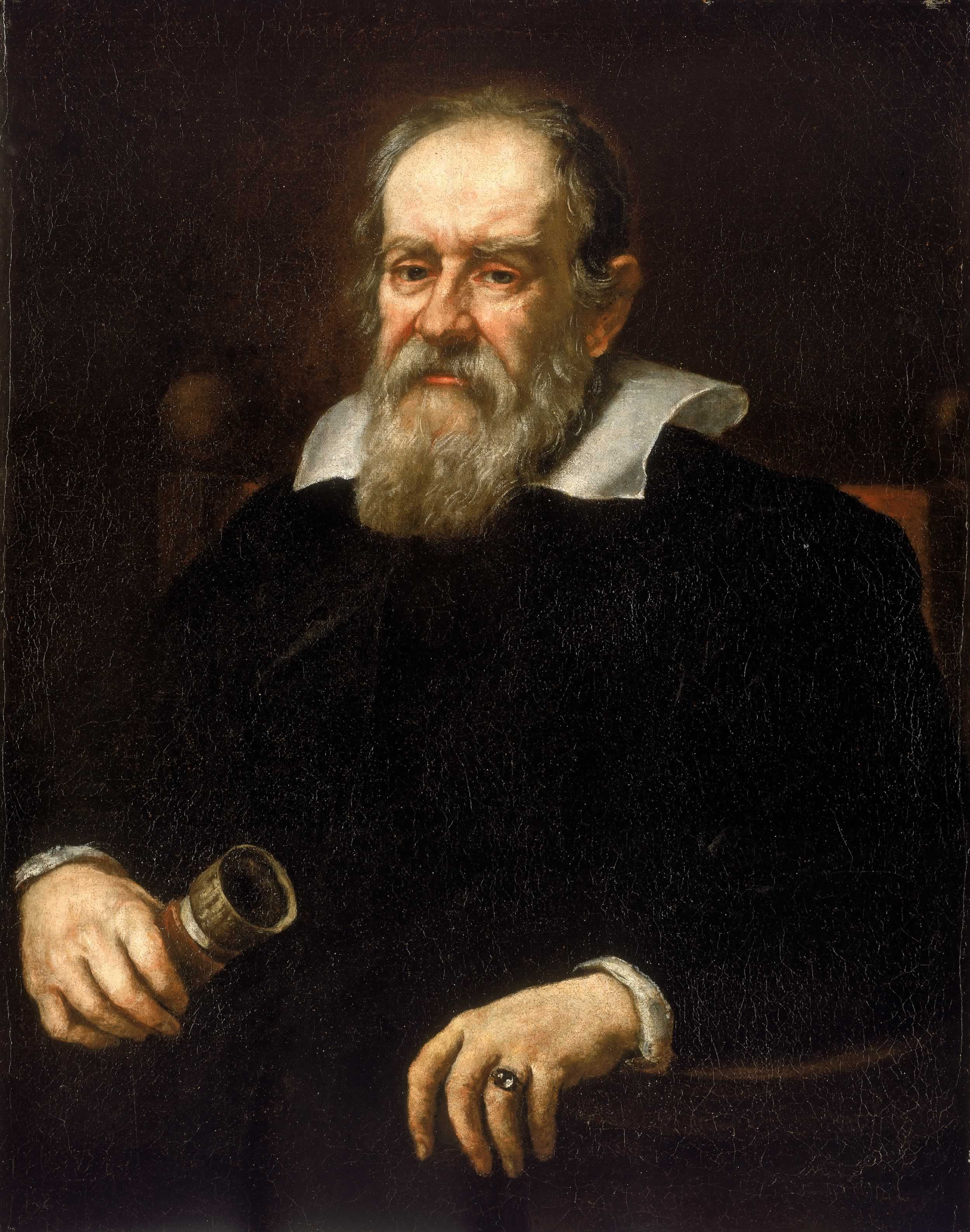
Galileo Galilei wrote in his Dialogue (1632):
And when I run over the many and marvelous inventions men have discovered in the arts as in letters, and then reflect upon my own knowledge, I count myself little better than miserable. I am so far from being able to promise myself, not indeed the finding out of anything new, but even the learning of what has already been discovered, that I feel stupid and confused, and am goaded by despair.

If I look at some excellent statue, I say within my heart: "When will you be able to remove the excess from a block of marble and reveal so lovely a figure hidden therein? When will you know how to mix different colors and spread them over a canvas or a wall and represent all visible objects by their means, like a Michelangelo, a Raphael, or a Titian?" Looking at what men have found out about arranging the musical intervals and forming precepts and rules in order to control them for the wonderful delight of the ear, when shall I be able to cease my amazement? What shall I say of so many and such diverse instruments? With what admiration the reading of excellent poets fills anyone who attentively studies the invention and interpretation of concepts: And what shall I say of architecture? What of the art of navigation?

But surpassing all stupendous inventions, what sublimity of mind was his who dreamed of finding means to communicate his deepest thoughts to any other person, though distant by might intervals of place and time! Of talking with those who are in India; of speaking to those who are not yet born and will not be born for a thousand or ten thousand years; and with what facility, by the different arrangements of twenty characters upon a page!

When the Father of Modern Science humbly admitted (indirectly through a character in his book) that he feels "stupid and confused" that he was far from discovering anything new, or, even further from learning all that has already been discovered; I think he was simply admiring the vast sea of Divine wisdom and knowledge.

Far from shying away from the quest to traverse that sea of Divinity, through the realization of his own limitations, Galileo has gained greater insight into the workings of the universe than others who are full of vanity.  

About Me

My photo
Medical practitioner. Amateur philosopher, pianist and composer.