Showing posts with label quotes. Show all posts

Friday, January 9, 2015

Serenity

"Such is this steep ascent,
That it is ever difficult at first.
But more a man proceeds, less evil grows.
When pleasant it shall seem to thee, so much
That upward going shall be easy to thee
As in a vessel to go down the tide,
Then of this path thou wilt have reach'd the end.
There hope to rest thee from thy toil."

                                          Dante, in Divine Comedy


Monday, October 14, 2013

Gravity

1. Sole Survivor

Gravity is a film about two astronauts, stranded in space by an accident, struggling to make a safe return to Earth. It's visually stunning, and its simple plot belies its vivid and realistic depiction of the story.


We can compare it to that Tom Hanks movie, Castaway. In both stories, [spoilers!] there were really no plot surprises: we knew very well that the lead characters will survive the fatal accidents, albeit barely.


2. Isolation


Although both Gravity and Castaway are about surviving tragedies, there is a subtle difference between these two films. If in Castaway, Chuck (Tom Hanks) was left in solitude by the accident (stranded on an island and abandoned by his longtime partner); in Gravity, Dr Stone (Sandra Bullock) was already living in solitude before the accident (traumatized by her daughter's death), and the tragedy (space accident) actually brought her back to society (to tell a most interesting story).


In other words, in Castaway, the crash made the survivor lonely; whereas in Gravity - the crash saved the survivor from her loneliness.


3. Don't just stay alive


This difference can also be seen in another way. By the end of Castaway, Chuck retells his misadventures and how he plans to "keep breathing, because tomorrow the sun will rise..". Isn't this scene similar to the one in Gravity, when Dr. Stone confides the loss of her daughter to the other astronaut, Kowalski (George Clooney)? 


So Chuck's attitude to "keep 

So Chuck's attitude to "keep breathing" (or just stay alive) despite his predicaments is similar to Dr. Stone's attitude for the most part of the movie. Dr. Stone started where Chuck left off. However, she soon realizes that her attitude has to change. She couldn't just stay alive, but to actually fight to stay alive.


4. From Blind Optimism to Idealistic Pessimism


What if Chuck's blind optimism - "tomorrow the sun will rise, who knows what the tide will bring" - is also a recipe for future disappointment? Of course "the tide" can bring miracles; but it can very well bring more disasters. To hope for a miracle is to give up on our own effort, and so, make us more vulnerable to disaster. 


That was how Dr. Stone reacted to her daughter's loss. She would have not survived the space accident if she persisted in this attitude - only hoping for a miracle to happen. And it was not a miracle that saved her, but her own wit (projected to Kowalski in the form of a hallucination).


By quoting Kowalski, "Houston, I have a bad feeling about this mission", Dr. Stone signaled her new found attitude: 'I don't think this will go well, but I'd do anything to make sure it will.'

Friday, November 9, 2012

Live with strangers

"Are you in adversity? Do not mourn in the darkness of solitude, do not regulate your sorrow according to the indulgent sympathy of your intimate friends; return, as soon as possible, to the day-light of the world and of society. Live with strangers, with those who know nothing, or care nothing about your misfortune; do not even shun the company of enemies.
Are you in prosperity? Do not confine the enjoyment of your good fortune to your own house, to the company of your own friends, perhaps of your flatterers, of those who build upon your fortune the hopes of mending their own; frequent those who are independent of you, who can value you only for your character and conduct, and not for your fortune"

Adam Smith in The Theory of Moral Sentiments (1759)

Friday, September 21, 2012

Of News and History

Should we keep ourselves updated with the latest news? Why not, this would make us informed citizens, right? Well, I doubt it now.

How much information can daily news give us? Plenty, of course. But most of the information they feed us is trivial, on further reflection. As we can be fooled by first impressions, the shallow depth of information that we gather from news may also fool us. Let me explain.

If today we read about an important news - the result of a general election for example. How can this information help us, if we still cannot be sure how this new government would perform? Are they going to be responsible, generous, or corrupt? So we read the news again tomorrow, and many days to come - until eventually we get a certain impression of the elected government.

So far, news seem to be useful - to judge governments, for example - until we realize that we only need a summary of events between the previous and future elections, in order to decide wisely on whom to support. All that time wasted on reading daily news could have been used to read our history.

But what is the purpose of learning history? "Those who cannot learn from history are doomed to repeat it". Obviously. 


There is actually nothing new in the news (if you pardon the pun). News events are nothing but repetition of the same mistakes - done by different people, at different times, in different places. I think we'd be better of reading history.


Sunday, February 12, 2012

Two Birds on a Tree

From the Upanishad:
Two birds, inseparable friends, cling to the same tree. One of them eats the sweet fruit, the other looks on without eating.  
On this same tree a person, sunk and grieving in slavery, is deluded, but upon observing the Lord happy and great, becomes free of sorrow.

Look at our friends on facebook. Many of them are having such a great time with their life - indulging good food, travelling the world, graduating from university, earning a salary, getting married, having kids, etc. Meanwhile, we reflect on what we have achieved in our life so far. 

If only we worked harder, we would have been admitted to a better college, like some of our friends. If only that happens, we could be offered a better job. And if only we get a higher pay, we could afford a bigger house, a faster car and support a bigger family. Ah, what a happy life that would be!

And so we thought.

....

How can the other bird looks on without eating the sweet fruit

The important point here, I think, is the bird's conscious decision to refrain from eating the sweet fruit -  although it wasn't forced to do so. Seeing its friend enjoying the fruit may be enough to keep the bird content. Maybe it has already eaten before clinging on to that tree. 

Wednesday, January 18, 2012

Reflecting on Death

Death is the only thing that is certain. I've been made even more aware of this fact on my current one-week clinical attachment on palliative care. This is a branch of medicine that specializes in helping people with incurable diseases to deal with their symptoms, especially pain. Palliative care doctors also looks after those who are approaching the terminal stages of their illness.

When should one start reflecting on death - on attending a funeral? with the loss of a loved one? on being diagnosed with cancer? 


This ability to anticipate death is what distinguishes humans from other animals. The fear of our mortality is not about being afraid of the afterlife. Rather, it is all about the fear of losing out from this earthly life. So long as we aspire to achieve something in our waking life, we will be afraid to die. 

But what about daredevils and stuntmen? I think these are the few who can suppress the fear of death by psychologically trying to minimize the potential that their risky activity might kill them. We must only ask among those that have barely escaped a fatal accident during a dangerous stunt, if the the fear of death was not resuscitated with that experience. 

On the other hand, when one exaggerates the potential that certain things like insects or flying on a plane can kill him, then one gets a phobia of those things. 

It's all too human to be afraid of death, but I think there's a way to transcend this fear. Our  worldly desires must be why we want to live longer - so that we we have more time to achieve them - and they are the cause of our fear of death. If we can constantly be mindful of our fulfilled ambitions - and contemplate on our achievements - desire for greater things can be compensated or better, extinguished.

"The aim of those who practice philosophy in the proper manner is to practice for dying and death"
Socrates

Sunday, January 15, 2012

Stupid and Confused

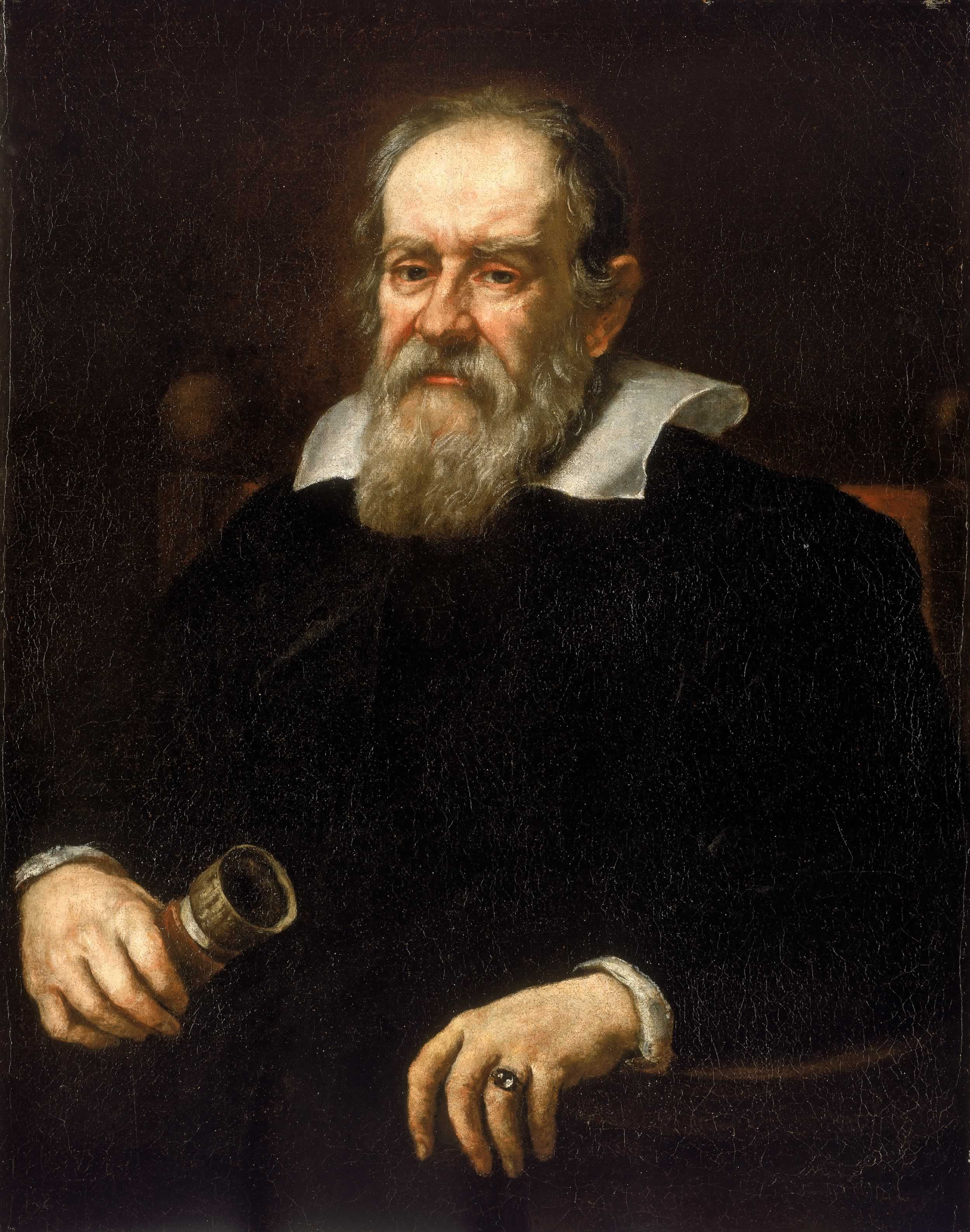
Galileo Galilei wrote in his Dialogue (1632):
And when I run over the many and marvelous inventions men have discovered in the arts as in letters, and then reflect upon my own knowledge, I count myself little better than miserable. I am so far from being able to promise myself, not indeed the finding out of anything new, but even the learning of what has already been discovered, that I feel stupid and confused, and am goaded by despair.

If I look at some excellent statue, I say within my heart: "When will you be able to remove the excess from a block of marble and reveal so lovely a figure hidden therein? When will you know how to mix different colors and spread them over a canvas or a wall and represent all visible objects by their means, like a Michelangelo, a Raphael, or a Titian?" Looking at what men have found out about arranging the musical intervals and forming precepts and rules in order to control them for the wonderful delight of the ear, when shall I be able to cease my amazement? What shall I say of so many and such diverse instruments? With what admiration the reading of excellent poets fills anyone who attentively studies the invention and interpretation of concepts: And what shall I say of architecture? What of the art of navigation?

But surpassing all stupendous inventions, what sublimity of mind was his who dreamed of finding means to communicate his deepest thoughts to any other person, though distant by might intervals of place and time! Of talking with those who are in India; of speaking to those who are not yet born and will not be born for a thousand or ten thousand years; and with what facility, by the different arrangements of twenty characters upon a page!

When the Father of Modern Science humbly admitted (indirectly through a character in his book) that he feels "stupid and confused" that he was far from discovering anything new, or, even further from learning all that has already been discovered; I think he was simply admiring the vast sea of Divine wisdom and knowledge.

Far from shying away from the quest to traverse that sea of Divinity, through the realization of his own limitations, Galileo has gained greater insight into the workings of the universe than others who are full of vanity.  

Tuesday, November 15, 2011

Dante's Destination


As he was growing tired of climbing the steep mountain to reach Heaven, Dante begged his guide: 


"How far we have to journey: for the hill
Mounts higher, than this sight of mine can mount." 


Thus his guide replied:


"Such is this steep ascent,
That it is ever difficult at first.
But more a man proceeds, less evil grows.
When pleasant it shall seem to thee, so much
That upward going shall be easy to thee
As in a vessel to go down the tide,
Then of this path thou wilt have reach'd the end.
There hope to rest thee from thy toil." 


Then as they continued their journey, at one point, Dante suddenly realized that his steps were getting lighter and easier to take. He asked:


"Say, master, of what heavy thing have I
Been lightened, that scarce aught the sense of toil
Affects me journeying?"


His guide then answered him: 

"When sin's broad characters, 

that yet remain upon thy temples, 
though well nigh effaced, shall be, as one is, all clean razed out,
Then shall thy feet by heartiness of will be so overcome, 

they not alone shall feel no sense of labour, 
but delight much more shall wait them, 
urged along their upward way."


-----
Quotes from Divine Comedy by Dante (1265-1321)

Sunday, October 23, 2011

The Lure of Anarchy

What does freedom mean? Maybe we could ask the Libyans. With Gaddafi's death, they have finally attained freedom from his rule. And so in other Arab countries we see their people fighting for freedom from the rule of their despotic leaders - a phenomenon recognized as the Arab Spring. Egypt is now free from Mubarak, Tunisia from Ben Ali, and now Libya from Gaddafi. 

What we also learn from the news recently, is that on the streets of New York, and in many parts of Europe, anti-capitalist protests are taking place in response to the financial crisis, which is squarely blamed on greedy bankers and evil manipulators of the financial institution. Have we become enslaved by capitalism?

So what is freedom? To me the best definition was given by Emile Durkheim, a French sociologist, "To be free is not to do what one pleases, it is to be master of oneself."

What we must realize, is that freedom from one system, does not entail total freedom from any system - it can only be followed by the rule of another. As what Thomas Hobbes, an English philosopher, wrote in his book, Leviathan in 1651,
Cover of the book I'm reading, Leviathan (1651) 
"[Whosoever] thinking sovereign power too great, will seek to make it less, must subject himself, to the power, that can limit it; that is to say, to a greater [power]"
Thus we observe that tyrannical rule is inevitable in every communist state, because to impose the communist economic system (common ownership of all property) it requires a government with unlimited power to restrain men's natural impulse to have all things for himself. 


On the other hand, capitalism (rights to own property), which is practised in democracies, breeds greed and inequality. Hence, we are lured to anarchy (absolute freedom from a central authority). 


Fortunately we are reminded by Hobbes, not to fall into this trap of embracing anarchy, in the same paragraph of his book that I have quoted above, that:
"[Of] unlimited power, men may imagine many evil consequences, yet the consequences of [not having this authority], which is perpetual war of every man against his neighbour, are much worse. The condition of man in this life shall never be without inconveniences" 

Saturday, July 23, 2011

The Power of Love

"Hate is increased by being returned, but can be destroyed by love"

Ethics (1677)
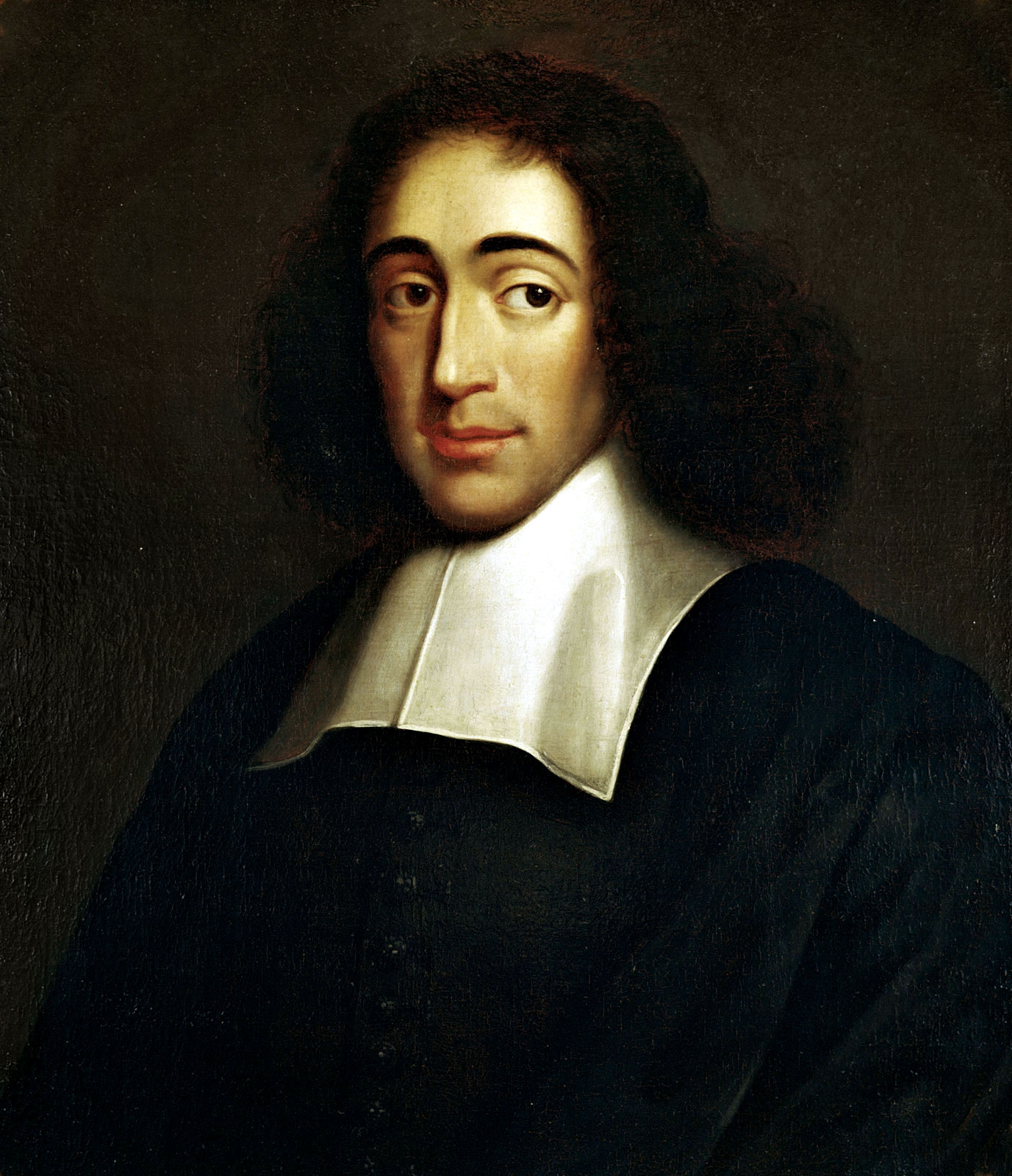
Baruch Spinoza

Monday, July 4, 2011

Not a Morning Person? This Quote Might Help

     " In the morning when thou risest unwillingly, let this thought be present- I am rising to the work of a human being. Why then am I dissatisfied if I am going to do the things for which I exist and for which I was brought into the world? Or have I been made for this, to lie in the bed-clothes and keep myself warm?- But this is more pleasant.- Dost thou exist then to take thy pleasure, and not at all for action or exertion? Dost thou not see the little plants, the little birds, the ants, the spiders, the bees working together to put in order their several parts of the universe? And art thou unwilling to do the work of a human being, and dost thou not make haste to do that which is according to thy nature?- But it is necessary to take rest also.- It is necessary: however nature has fixed bounds to this too: she has fixed bounds both to eating and drinking, and yet thou goest beyond these bounds, beyond what is sufficient; yet in thy acts it is not so, but thou stoppest short of what thou canst do. So thou lovest not thyself, for if thou didst, thou wouldst love thy nature and her will. But those who love their several arts exhaust themselves in working at them unwashed and without food; but thou valuest thy own own nature less than the turner values the turning art, or the dancer the dancing art, or the lover of money values his money, or the vainglorious man his little glory. And such men, when they have a violent affection to a thing, choose neither to eat nor to sleep rather than to perfect the things which they care for. But are the acts which concern society more vile in thy eyes and less worthy of thy labour? " 
Marcus Aurelius
Meditations (written in 167 AD)

Saturday, June 25, 2011

Why the Movie SENNA is Rated 100% Fresh

Let me re-quote Joseph Campbell (I've done this beforetwice!) from his revolutionary work, The Hero with a Thousand Faces, to show you that Senna has what all the best movies have in common: a familiar plot about the hero as deftly described by Campbell in that book.  If you've watched Senna, you'd know what I mean.

The mythological hero, setting forth from his commonday hut or castle, is lured, carried away, or else voluntarily proceeds, to the threshold of adventure.
There he encounters a shadow presence that guards the passage.  The hero may defeat or conciliate this power and go alive into the kingdom of the dark (brother-battle, dragon-battle; offering, charm), or be slain by the opponent and descend in death (dismemberment, crucifixion). 
Beyond the threshold, then, the hero journeys through a world of unfamiliar yet strangely intimate forces, some of which severely threaten him (tests), some of which give magical aid (helpers). 
When he arrives at the nadir of the mythological round, he undergoes a supreme ordeal and gains his reward. 
The triumph may be represented as the hero’s sexual union with the goddess-mother of the world (sacred marriage), his recognition by the father-creator (father atonement), his own divination (apotheosis), or again - if the powers have remained unfriendly to him – his theft of the boon he came to gain (bride-theft, fire-theft); intrinsically it is an expansion of consciousness and therewith of being (illumination, transfiguration, freedom). 
The final work is that of return. If the powers have blessed the hero, he now sets forth under their protection (emissary); if not, he flees and is pursued (transformation flight, obstacle flight).
At the return threshold the transcendental powers must remain behind; the hero re-emerges from the kingdom of dread (return, resurrection).  


The boon that he brings restores the world (elixir).


Essentially, we all want to be told the same old story again and again.

....

Wednesday, May 11, 2011

A Moment of Silence

I'm trying to find the right things to share in this blog, using the right words. It can be difficult sometimes. Like Joseph Campbell once said, 
“The best things cannot be told, the second best are misunderstood. 
After that comes civilized conversation; after that, mass indoctrination; 
after that, intercultural exchange."

Friday, February 25, 2011

We just want to be able to live like human beings

"Let me be clear, the change that is taking place across the region is being driven by the people of the region. This change does not represent the work of the United States, or any foreign power. It represents the aspiration of people who are seeking a better life. As one Libyan said, 'We just want to be able to live like human beings.' It is the most basic of aspirations that is driving this change." 
President Obama on the revolutions in the Middle East and North Africa (video)


Watch the video below of an experiment to find out how monkeys - who are also primates, like us - react to apparent injustice (would they notice it at all?). While the first monkey (Vulcan) gets a dry biscuit if he returns a token, the second monkey (Virgil) gets a  juicy grape when he returns the same token. Notice how Vulcan reacts to this blatant injustice. [start at 2:06]


It's fairly obvious then, why Tunisians, Egyptians, and now Libyans get so angry and frustrated at their leaders. They only want to live like the people in other countries: from the busy commuters of New York, London, Shanghai and Singapore; to the suburban dwellers of other cities; and the farmers and fishermen in smaller towns. Even monkeys get riled up if they are treated unequally!

We just want to be able to live like human beings - that is, like the better ones among us.


...

Monday, February 21, 2011

It's more infectious than fanaticism, thank goodness!

...
"The freedom of thought and action that is necessary for discovering the truth is a precursor...to the more expansive ideal of political and civil freedom, a meme that spreads easily, apparently. It is much more infectious than fanaticism, thank goodness. The cat is out of the bag. There is no way that enforced ignorance can win in the long run. You can't readily uneducate people.  

As communications technology makes it harder and harder for leaders to shield their people from outside information.... the floodgates will open all over the world with tumultuous effects." 

[pg 303-304]
Daniel C. Dennett: Freedom Evolves (2003)


Saturday, January 22, 2011

50 Book Challenge


‘The first step towards the attainment of real discovery was the humiliating confession of ignorance.' 
Sir Humphry Davy (1778 - 1829)


And so I humbly admit my ignorance. Even if I will fail to achieve the Romantic ethos of 'real discovery', I strongly hold that there is still much to learn from what others have already discovered. From Archimedes to Newton; Smith to Keynes; Cook to Armstrong; Hippocrates to Jenner. Great men and women have long toiled to unravel the mysteries, disprove false beliefs, and ultimately, enable us to understand a little more about our life and the Universe we live in.
  
I challenge myself to read 50 books this year - a tall order especially while studying medicine, but not impossible - hoping to understand what these great people have long did. Yes, I'm treading a road already taken by others - by merely absorbing second-hand knowledge. But to follow the steps of Sir Davy towards making a real discovery, I shall begin with a 'humiliating confession of ignorance.'

...
Find out the 10 best books I read in 2010.

Sunday, January 2, 2011

Top 10 Read of 2010

This is the list of the best books I have read in the year 2010.

[ 1 ] Guns, Germs & Steel - Jared Diamond

  This is simply the best book I have read so far. Winner of the Pulitzer Prize, this masterpiece endeavours to explain why the European societies were the ones to conquer the New World, instead of the other way around - an attempt by the author that was achieved using archaeology, geography; also, animal and plant biology!


[ 2 ] Fermat's Last Theorem - Simon Singh

  Receiving almost 120 5-star rating in amazon.co.uk, this book explores the exciting journey of mathematicians through the ages to prove Fermat's last theorem (a deceivingly easy-to-prove mathematical equation). With riveting stories of the personalities behind this journey, this book is a testimony of my conviction that since there are so many non-fiction tales to read, I haven't the time to read fiction. Of course, history is not without errors, as long as it's written by fallible historians. 


[ 3 ] The Unfolding of Language - Guy Deutscher

  Aren't you interested to learn why our language is so different from others, and how come - apart from the differences - there exist similarities (even between English, French & Malay! - e.g. Two, Deux, Dua) ? Well, look no further, this book tells us just that, and much more - like why the language of our forefathers seem so different from ours. 


[ 4 ] Outliers - Malcolm Gladwell

  It seems so easy to attribute success to pure talent - as books written about high achievers often allude to. However, Gladwell tries to prove just the opposite, that if it wasn't for their luck, these high achievers (read: outliers) might not have succeeded in whatever field they're in. And this includes billionaires Bill Gates & Steve Jobs (Mark Zuckerberg was not included probably because this was written two years ago), the Beatles & athletes. Of course, in almost all cases, hard work had accompanied seizing every good opportunity.


[ 5 ] Life Ascending - Nick Lane

  From the beginnings of life on Earth deep in the ocean, to the complex multicellular life on land able to trap energy from the sun (via photosynthesis), to sentient beings curious and intelligent enough to ponder on their own existence; this book brings elementary biology to a new level, attempting to explain the 'ten great inventions of evolution' using chemistry, biology, archaeology & common sense. 


[ 6 ] The Ascent of Money - Niall Ferguson

 British historian, turned Harvard professor, Niall Ferguson discusses the 'origin of money' - those colour-printed papers/copper we regard so dearly to. When many saw the recent financial crisis as the fall of capitalism - having researched and skilfully written the history of financial markets - the author had these words to conclude his book:

 '..far from being 'a monster that must be put back in its place', as the German president recently complained, financial markets are like the mirror of mankind, revealing every hour of every working day the way we value ourselves and the resources of the world around us.

  It is not the fault of the mirror if it reflects our blemishes as clearly as our beauty.'

-

[ 7 ] The Armchair Economist - Stephen Landsburg

 An interesting read about the economics of daily life. From why popcorns are so expensive at cinemas, to why the government must not charge high tariffs on imported cars. It was so interesting that I finish reading it in barely two days!


[ 8 ] The Blank Slate - Steven Pinker

  I have just finished reading this book over Christmas. A cognitive scientist goes head on with the nature vs nurture debate, from IQ to gender differences. Not for the faint-hearted, hardcore liberals or feminist/sexist. Otherwise, an insightful read!  Nature -1; Nurture - 0


[ 9 ] The Denial of Death - Ernest Becker


  This is the second Pulitzer prize winning book in my list. It is also the oldest one published among the others in my list. The late author explored, in this book, the philosophy of the denial of our inevitable demise: in our social life (loyalty to friendship circle), work (striving to build one's own legacy) and religion (the promise of an after life).


[ 10 ] Jews, God & History - Max I. Dimont

  Finally, as the number 10 book of the year, this is, as its name implies, a record of the history of the Jewish people and how their beliefs (hence, 'God' in the title) had influenced their progress and fated them to meet challenges through the ages. I agree with the author after reading this book, that the Jews have been important contributors to our history (including the non-Jews), from the Judeo-Christian-Islamic scriptures & faiths,  to our economic, philosophical, & scientific progress. 

  Although the author no longer professes the Jewish faith,  he has great respect for it especially for his Jewish father.  This book was not written to promote Zionism, argue for or against it. It does, however, discuss the history of the formation of Israel, wars & crises of the middle-east. 

Thursday, December 30, 2010

What I shouldn't have said

  We are inevitably bound to say something that we may not be proud of, or even disagree with, as time passes by. Having penned down my thoughts in this blog for over a year now, I would like to humbly apologise for having said the following (for various reasons):

1. Perhaps the most regretful thing I did in this blog was to degrade illegal immigrants by comparing them to household pests, in 'Do Biometrics Help in Pest Control'. Although I did mention my apologies for employing this analogy in that post, I realise now that I shouldn't have used it anyway. In fact, I have come to realise that, the more we treat people like pests, the more likely they'll behave like those creatures. Consider that post nullified.

2. I'm not proud of my defensive tone either. I once had a heated discussion with one commenter in my post 'Turkey has higher infant mortality rate than Gaza'. As you may have noticed, I typed my comments using CAPITAL letters unnecessarily. There are many instances in which I harshly criticized certain individuals, ideologies, or even books! I hope my arguments against these parties have been taken into consideration by my readers. If these arguments were not credible, or if they were flawed, I can only hope for someone to correct me, or to support my arguments with more substantial points. 

  There are many other things I did wrong in this blog, so let me end this note of regret with a reminder to all my readers, inspired by a quotation from a seafood restaurant back home - as they advise their customers about their cooking, 'Kalau sedap beritahu kawan, kalau tak sedap beritahu kami'. So let me remind you that: If you enjoy reading my blog, tell your friends about it. If you find any mistake, tell me about it.

Saturday, October 23, 2010

The Mind Of A Bigot

“ ... is like the pupil of the eye; the more light you pour upon it, the more it will contract.”


About Me

My photo
Medical practitioner. Amateur philosopher, pianist and composer.