Serving the People.
Showing posts with label personal. Show all posts
Showing posts with label personal. Show all posts
Monday, November 11, 2013
Sunday, February 10, 2013
The Sound of Reassurance
 On Brahms' Intermezzo in A major
The first time I paid attention to this beautiful piano piece was on a mid-autumn late afternoon, travelling home from work. I had it on my mp3 player along with other classical pieces in a compilation album of the 'Best Classical Music' I downloaded from the internet. I fell in love with it instantly as I heard the pristine chorus.
But before we talk about the chorus, first let's listen to this piece from its very beginning.
...
The opening theme is rather modest. In fact this opening statement is repeated three times, before, a circular, series of upgoing and downgoing notes are played. This dizzying array of notes that follow the repetitive opening melody may be uninteresting to the listener. But this is why we can take it as a test of the listener's endurance to pay attention to this piece, despite its apparent dullness in this section. This becomes more challenging as a further series of downgoing dissonance follow.
It is not long, however, before a comforting, most beautiful chorus is introduced - and the listener's patience is finally redeemed. This is when we can feel that the music is telling us that "everything is alright."
Then, the piece takes us to its problematic theme. This fast-paced theme is played twice and each time it ends with a 'question mark' - before moving on to the next theme of temporary comfort. The slow changing notes of this soothing theme, are then followed by the restless problematic theme again. This time, however, the problematic theme is eventually merged to the recapitulation of the opening section. The merge is cleverly achieved by the upgoing 'question mark' repeated until the opening melody is finally reached.
After the opening theme is repeated again, it is followed by the circular theme, now already familiar on repeated hearing. And not long after, we hear the wonderful chorus that ends the piece. Here again, we are reminded by the chorus, poetically repeated at the end, that "everything will be alright."
(This is my rendition of this brilliant composition by Brahms. Enjoy)
Monday, January 7, 2013
Of Games and The Illusion of Control
As a part-time gamer, I admit to sometimes losing myself to computer games. In fact, I have just spent the holidays getting totally absorbed in some of them. And of course, it was only because they were so much fun - especially to play online games with friends.
I have also reflected on the gaming experience itself, and I thought, perhaps what is fun about it is not that gaming is an effortless activity. Games are fun not simply because they let you be lazy. They can actually be quite demanding - even if not physically so - as they require our time, energy and concentration. Easy games can quickly bore us. And despite how much a gamer can be lazy in real life, he often does give his best while playing his favourite games.
However, we are not that far mistaken when we think playing games are fun because they are easy to do. But what is really so absorbing about them is that they let us believe that we can achieve great things with only a little amount of effort. So the lazy hypothesis is not that far off after all.
For all kinds of games that we play - on the computer, boards, cards - we may have the illusion that we are in full control of how we want to play these games. Whether to move the pawn or the horse in a game of chess, for example, we think is our decision. But it is not.
As the saying "The house always wins" has always reminded gamblers, never mind how good you are at playing cards, and no matter how lucky on the slot machines, the casino will always get your money eventually. That is because card games and slot machines are designed to let you believe that you can win a lot of money for very little effort - even if you never do.
We might also unashamedly generalize our thoughts on gaming here to other sports - I mean the really physical ones like football, or tennis. Of course, we have always regarded sportsmen to be the shining exemplars of hard work. Footballers and tennis players must train hard for extensive periods of time, that we can never mistake them for average video gamers.
But looking beyond the physical aspect, perhaps we can compare sportsmen to gamers. After all, don't all sportsmen also believe that they can achieve great things with little effort. Of course it is not easy to actually play professional football, but in the end doesn't it all comes down to kicking the ball past the goal posts? You score a goal, you win the match, money and fame.
Scoring a goal gives such a rush of great feeling, even for the spectators. But after all those manic celebration, can someone remind us what a ball kicked into a net has achieved for all of us?
Alright, don't let me spoil your party. Even so I think my point is still valid. It is our nature to find the easiest way to get the most valuable things in life - be it picking the right number in the lottery to win some money, placing the pieces in chess to win some honor, or kicking a ball past the goal posts to win both money and honor.
The irony is that we end up spending more time and effort than how much we thought we would in playing these games and sports, only because of the illusion of how easy it would be to achieve the things we wanted through these activities in the first place. I can run a business, kill enemy troops, and build an empire, only with a few clicks of my mouse. But all I have done was to waste the time and energy, that I could have used to achieve those things in real life, in front of a laptop screen.
Well, borrowing Nietzsche's words, I'm only human, all too human.
I have also reflected on the gaming experience itself, and I thought, perhaps what is fun about it is not that gaming is an effortless activity. Games are fun not simply because they let you be lazy. They can actually be quite demanding - even if not physically so - as they require our time, energy and concentration. Easy games can quickly bore us. And despite how much a gamer can be lazy in real life, he often does give his best while playing his favourite games.
However, we are not that far mistaken when we think playing games are fun because they are easy to do. But what is really so absorbing about them is that they let us believe that we can achieve great things with only a little amount of effort. So the lazy hypothesis is not that far off after all.
For all kinds of games that we play - on the computer, boards, cards - we may have the illusion that we are in full control of how we want to play these games. Whether to move the pawn or the horse in a game of chess, for example, we think is our decision. But it is not.
As the saying "The house always wins" has always reminded gamblers, never mind how good you are at playing cards, and no matter how lucky on the slot machines, the casino will always get your money eventually. That is because card games and slot machines are designed to let you believe that you can win a lot of money for very little effort - even if you never do.
We might also unashamedly generalize our thoughts on gaming here to other sports - I mean the really physical ones like football, or tennis. Of course, we have always regarded sportsmen to be the shining exemplars of hard work. Footballers and tennis players must train hard for extensive periods of time, that we can never mistake them for average video gamers.
But looking beyond the physical aspect, perhaps we can compare sportsmen to gamers. After all, don't all sportsmen also believe that they can achieve great things with little effort. Of course it is not easy to actually play professional football, but in the end doesn't it all comes down to kicking the ball past the goal posts? You score a goal, you win the match, money and fame.
Scoring a goal gives such a rush of great feeling, even for the spectators. But after all those manic celebration, can someone remind us what a ball kicked into a net has achieved for all of us?
Alright, don't let me spoil your party. Even so I think my point is still valid. It is our nature to find the easiest way to get the most valuable things in life - be it picking the right number in the lottery to win some money, placing the pieces in chess to win some honor, or kicking a ball past the goal posts to win both money and honor.
The irony is that we end up spending more time and effort than how much we thought we would in playing these games and sports, only because of the illusion of how easy it would be to achieve the things we wanted through these activities in the first place. I can run a business, kill enemy troops, and build an empire, only with a few clicks of my mouse. But all I have done was to waste the time and energy, that I could have used to achieve those things in real life, in front of a laptop screen.
Well, borrowing Nietzsche's words, I'm only human, all too human.
Monday, December 31, 2012
New Year's Resolution
To have everything would make us thankful for nothing,
To have nothing would make us thankful for everything.
There's always pleasure in achieving whatever it is that we have always wanted - or is there? Let's say we resolve to lose some weight this year. Would it really make us happier to have lost some weight by the end of the year? Or would it be more likely that we get the false reassurance that we could probably lose more weight - so that however much weight that has been lost does not count anymore.
It's good to have a new year's resolution, especially healthy ones, like losing weight, working harder, being nicer to others, etc. However, on reflection, I think it may be wiser to resolve on getting nothing - or to lose everything. Let me explain why.
At first, I thought my resolution is to be grateful for everything in the new year - saying thanks every morning, for every meal and every little achievement. Fortunately I quickly realize how futile this effort would be. Not only will I eventually forget to do it, I also imagine myself forgetting why I wanted to do it in the first place.
In other words, saying thanks - or rather, forcing ourselves to say thanks to every little thing - can turn into an empty ritual. This noble practice would eventually become an insincere habit. So, that's why I think I ought to do the opposite.
Instead of reminding myself to be thankful for everything, it's more practical to do whatever that would make a person do it naturally. And that is, by resolving to have nothing. A poor man's penny is worth much more than that of the rich man.
Of course, I don't expect to lose it all this new year. But that is precisely why I resolve to do so - my failure (to lose everything) would make me happier for another year (as I'll have much more than I ever wanted). However, if fate will be unkind to me, at least I can still be happy that I have achieved my new year resolution.
Happy New Year 2013!
To have nothing would make us thankful for everything.
There's always pleasure in achieving whatever it is that we have always wanted - or is there? Let's say we resolve to lose some weight this year. Would it really make us happier to have lost some weight by the end of the year? Or would it be more likely that we get the false reassurance that we could probably lose more weight - so that however much weight that has been lost does not count anymore.
It's good to have a new year's resolution, especially healthy ones, like losing weight, working harder, being nicer to others, etc. However, on reflection, I think it may be wiser to resolve on getting nothing - or to lose everything. Let me explain why.
At first, I thought my resolution is to be grateful for everything in the new year - saying thanks every morning, for every meal and every little achievement. Fortunately I quickly realize how futile this effort would be. Not only will I eventually forget to do it, I also imagine myself forgetting why I wanted to do it in the first place.
In other words, saying thanks - or rather, forcing ourselves to say thanks to every little thing - can turn into an empty ritual. This noble practice would eventually become an insincere habit. So, that's why I think I ought to do the opposite.
Instead of reminding myself to be thankful for everything, it's more practical to do whatever that would make a person do it naturally. And that is, by resolving to have nothing. A poor man's penny is worth much more than that of the rich man.
Of course, I don't expect to lose it all this new year. But that is precisely why I resolve to do so - my failure (to lose everything) would make me happier for another year (as I'll have much more than I ever wanted). However, if fate will be unkind to me, at least I can still be happy that I have achieved my new year resolution.
Happy New Year 2013!
Tuesday, March 20, 2012
On Being a Critic
 |
| Probably not the best singer out there |
Everyone has a right to be a critic. We can each form our own judgement - about anything really, from songs to films, food and politics. We are often asked to fill in evaluation or feedback forms for certain events we've attended, or for our colleagues and supervisors in the office or university. I'm not sure about you, but I get stuck every time I arrive at the 'Suggestions for improvement' section. I usually just write 'None'. So what makes a good critic?
Can Simon Cowell sing? Can any of the Rotten Tomatoes critics make a successful film? Can the opinionated political columnists run the country? Of course not!
I think it must have occurred to us that the best critics are usually under-performers in the field that they themselves judge. But why?
During medical ward rounds, as students, we are often encouraged to present the case of patients we have clerked to the consultant. Although it seems like a straightforward process of regurgitating the medical history elicited from the patient, case presentation during ward rounds can be tricky. First, you must make sure you got enough information from the patient, or your history would be incomplete. Then, when you present the case, you must trigger some interest from your consultant, not making it too long that it would bore your audience, or too brief that you lose all the important bits out.
When I listen to my colleagues presenting a case, I find it quite easy to make a mental list of criticisms and how they could have done it better. Of course, I never share these thoughts with them, as not to be impolite. I'd like to think that I can do better than my colleagues, but the truth is I can't. The fact that it's too easy for me to criticise my colleagues' case presentation only highlights my own weaknesses in this particular area.
When I listen to my colleagues presenting a case, I find it quite easy to make a mental list of criticisms and how they could have done it better. Of course, I never share these thoughts with them, as not to be impolite. I'd like to think that I can do better than my colleagues, but the truth is I can't. The fact that it's too easy for me to criticise my colleagues' case presentation only highlights my own weaknesses in this particular area.
Another way to see this is to consider who makes the worst judge - one who praises more easily than criticising. If one is allowed to speak freely and not inhibited by trying to be polite, and yet has nothing bad to say to most people about his field of expertise, that is not because he is simply being too nice. It must be that he does not feel disgusted by the poor performance of others, as he had long realized his own imperfections in that area.
Indeed the first step to great success is to admit our worst weaknesses.
Wednesday, March 14, 2012
Structured Chaos

There are generally two ways of building a structure: (1) from template; or (2) from chaos. I argue that structures that are built from chaos - that is, structured chaos - are much more robust and stronger than those reproduced or built from blueprints. Let me give some examples.
Take the computer as a structure, for example. We are all aware that there is a fixed, orderly, and predictable relationship between the components of a computer - CPU, RAM, hard disk, etc. In fact within each component, there is an even more intricate and precise order of much smaller parts. While this highly structured piece of modern technology has become an integral part of our lives, unfortunately, we also know that it is quite fragile. It can overheat, easily broken to pieces, and also susceptible to viruses and malwares.
Compare this to the human body. Of course there is also a fixed order between the parts of the human body - the brain in the head does the thinking, heart between the lungs pumps blood, bowels in the abdomen absorb nutrients, etc. But underneath this order there is also chaos - the normal variation of our anatomy, genetic makeup, and living conditions. And yet, the human body - a structured chaos - can survive physical trauma, environmental stressors, and many different kinds of infection!
What does this all mean then? Well, I'm only trying to justify my own chaotic mind. I envy many of my colleagues who have a structured approach to study by memorising the facts in lecture notes and simply do the practical stuff the way we are taught to do it. Meanwhile, I don't usually revisit lecture notes, preferring to read other sources and then reorganize all the facts back together in my head.
At least I like to think that, while many of my friends study to pass exams, I study for my own interest. Even computers can pass exams by simply storing and regurgitating all the facts! What makes us different from computers, is that we can create new links between the facts stored in our memory, and therefore speculate and create new hypotheses. This can happen in spite of the disorganized way facts are stored in our brain. In other words, we can build structure from chaos - i.e. structured chaos. Isn't this the root of our creativity?
Monday, March 5, 2012
Maintaining Improbability
 |
| Egypt uprising in 2011 (Image source) |
Even if something is supposed to exist, it would not live very long unless it can also survive against all odds of its existence. For example, when a new government is officially installed after it has won a general election, it would not remain in power for very long unless this new government has also worked out ways of appeasing the opposition parties and their supporters. Otherwise, it would be toppled by the opposing forces soon enough.
Another example would be a biological system, like the human body. It is amazing how the human body is naturally formed by complex multiplication and differentiation process of a single cell - a zygote. It is even more astonishing that it could survive at all! This is not only about our need for oxygen. In order to survive, we must also protect ourselves against external threats (toxic materials, deadly infections, extreme weather) and our inherent instability (genetic abnormalities, degenerative diseases, cancer, etc.).
Survival is more about maintaining improbability, than just natural occurrence. So for me to survive my medical course, I must not only focus on working hard to pass all my exam. What's more important is to address the challenges that may disrupt this progress. And these challenges come from two dimensions:
(1) externally, such as misleading exam questions and unfair examiners;
(2) internally, (an inherent instability) such as forgetfulness and misapprehensions.
Passing my exam will not just happen naturally from hard work. I would also have to be equipped in facing those challenges highlighted above - by being careful in reading questions, try to stimulate interest from the examiners, do revision to solidify my knowledge and verify the learned facts.
...
Once we have realized that in order to survive, we are constantly struggling against all odds, then we will have a greater appreciation of even the smallest achievement in our daily lives.
Sunday, March 4, 2012
Sunday Morning Reflection

We don't get this me-time on weekdays, or later parts of the weekend as they are spent fulfilling our commitments to our job, close friends, and family. And it usually continues throughout weeknights, as our minds would still be bogged down by unfinished jobs and plans for the following day. Don't get me wrong, these are still time well spent, even when they are dedicated to other people.
What is special about Sunday morning is that, usually by Saturday night, we have fully recovered all our physical and mental energy spent in the past week of hard work. Despite this, we have all day today to ourselves.
"So what should I do with all this free time?"
We shouldn't be asking ourselves this question. When it comes up to mind, that means boredom will set it soon, if it hasn't already done so. Boredom, is equally suffering to the mind as exhaustion. If in exhaustion we have lost the resources (either physical or mental energy, or time) to lead a satisfying life, when bored, we have lost our direction and purpose to live (despite having time and energy) altogether.
So actually, boredom is a worse condition than exhaustion. No wonder depression is still rampant in our society despite all the conveniences of modern living. In fact, it could be more prevalent as with readily available food, and assistance of technology, we have more free time, but with no clear direction on how to spend our time meaningfully.
Fortunately, I have found what I'd like to do with my time. By reading, reflecting and writing, I can have a million years, and neither boredom nor exhaustion will set in. C'est la vie!
Tuesday, February 21, 2012
Is This The End?
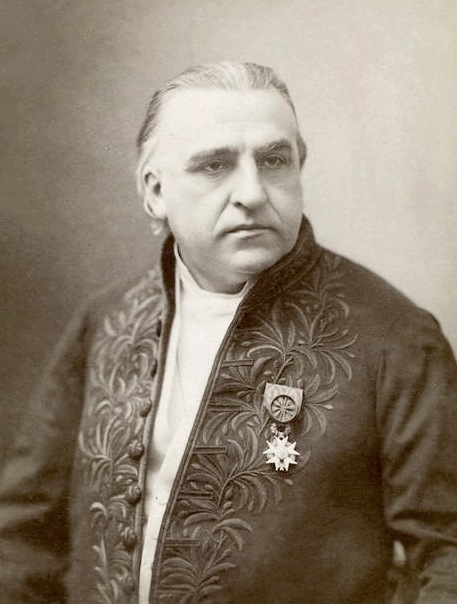 |
| Jean-Martin Charcot (1825-1893) Father of Modern Neurology |
Over the last five weeks, I have learned about how things can go wrong in different parts of our brain, and I have seen how this manifests in a myriad of symptoms: funny sensations, electrical pains, terrible headaches, shakes of the hands, twitching of the neck, pumping of the muscles, memory loss, speech impairment, or even blindness with normal functioning eyes!
Surely, I have come far to do this clinical attachment now. I still remember that almost a decade ago (!) we were taught in school the names of the different parts of the brain - cerebrum, cerebellum and medulla oblongata - and we also had to remember their different function. Like everyone else, I was fascinated by their wonderful names and intrigued with the brain itself, but I have never really thought then that one day I would be learning more about the brain!
Well, that is what I am doing now indeed. Looking back to where I come from: a curious child kept busy with school in the mornings, homework in the evenings, piano lesson on Saturdays and TV or cinema on Sundays; even if my life journey ends here, I'm very pleased and satisfied with it. But this is not the end - not yet.
There are two ways of looking at life. Either see it as a journey to reach a certain destination. Or see the whole life itself as a destination: Every new day is a destiny of all the days that have gone past.
Saturday, January 28, 2012
This Is My Song
............
This is my song, Oh God of all the nations,
A song of peace for lands afar and mine.
This is my home, the country where my heart is;
Here are my hopes, my dreams, my sacred shrine.
But other hearts in other lands are beating,
With hopes and dreams as true and high as mine
My country's skies are bluer than the ocean,
and sunlight beams on clover leaf and pine.
But other lands have sunlight too and clover,
and skies are everywhere as blue as mine.
This is my song, oh God of all the nations;
a song of peace for their land and for mine.
.jpg)
Wednesday, January 25, 2012
Our Precious Yet Fragile Memory

How much do we value our memory? Isn't it the one thing that glues together all our experience into a meaningful narrative, and gives meaning to our private lives?
----
We forget a lot of things all the time - except the savants among us, of course. And yet there are things that get stored in our memory - intentionally or otherwise. Things that we want to remember, especially our achievements, memories of our loved ones, relevant knowledge to pass exams, etc are not the only ones that define our being. In fact, even memories that we try hard to forget like embarrassing moments and hateful things also make us who we are.
So what is it like to lose our memory? To the person who is losing all her memory, it will cause some confusion and distress, quite obviously. "Where am I? Who are you? ...Who am I?"
But there will be even more distress for the carer, and loved ones. On top of the trouble of looking after people with dementia, the fact that someone who once knew you really well could no longer recognize you would make you even more upset.
Without realizing it, the sadness and pity that we feel when we find out that someone we care about is suffering from dementia - or any memory problems - actually comes from of our own insecurity facing the new reality that the other person no longer remembers us. We'd then ask ourselves, "Who else cares about me?"
Saturday, January 14, 2012
Museums and Horded Items

Museums reflect the compulsive hoarder that's inside all of us. We tend to keep things, even if they have no use for us anymore - over/undersized clothes, books, dvds, old newspapers, etc. We buy things that do nothing but collect dust, like ceramic souvenirs. And we take thousands of photos even if no one (including ourselves) would be interested to see them again anyway.
There are huge differences however, between our collection of useless stuff and museums. Firstly, museums employ curators to look after their collections. Also, thousands of people flock museums everyday. In contrast, our private collections get much less attention. They usually do nothing but lie around just taking up space in our room.
Why do we value things that can be of no practical use for us anymore that we keep them? That's because we value our history, and our hoarded items are pieces of that memorable past. Those clothes remind us that we were once skinny or thick. Our books and dvds tell us that we have read and seen quite a lot of interesting things. Old newspapers and photos are the ones that really capture our history, either by journalists or our camera.
Maybe it's time to let go - donate, recycle or throw away - our collection of unnecessary stuff.
As much as they can remind us of our past, keeping too many of them for too long would only clutter our present.
Saturday, December 31, 2011
Forgotten What I've Read
Here are the top 11 books I read in 2011. Don't ask me what I've learned from them - most of their contents have been lost into my subconscious.
1. The Republic by Plato
2. The Hero of a Thousand Faces by Joseph Campbell
3. Origin of Species by Charles Darwin
4. Ethics by Baruch Spinoza
5. Leviathan by Thomas Hobbes
6. Memories, Dreams and Reflections by Carl Jung
7. The Wealth of Nations (I-III) by Adam Smith
8. Critique of Pure Reason by Immanuel Kant
9. Public Opinion by Walter Lippmann
10. The Prince by Niccolo Machiavelli
11. Symposium and The Death of Socrates by Plato
1. The Republic by Plato
2. The Hero of a Thousand Faces by Joseph Campbell
3. Origin of Species by Charles Darwin
4. Ethics by Baruch Spinoza
5. Leviathan by Thomas Hobbes
6. Memories, Dreams and Reflections by Carl Jung
7. The Wealth of Nations (I-III) by Adam Smith
8. Critique of Pure Reason by Immanuel Kant
9. Public Opinion by Walter Lippmann
10. The Prince by Niccolo Machiavelli
11. Symposium and The Death of Socrates by Plato
If there is one thing I've learned from these books, it is that stoicism rules.
Happy new year 2012!
p/s: Do not worry if the world is going to end in 2012, or even if it doesn't. If our conscience is clear and if we live life for the present, then we are always ready to face our death - for what is death but a prolonged sleep? If we've been good, then there should be no nightmares for us, and whatever will happen to us when we are awoken, let God be the Judge!
Wednesday, November 9, 2011
From An Ideology To A Cult
As a huge fan of the mythologist Joseph Campbell, I was really excited when I found out that a documentary film about his ideas are playing in selected cinemas in the US. When I was watching the trailer (below), I suddenly realized how close this admiration of Joseph Campbell has been turning into a cult of its own.
Having said that, I still recommend you his book, "The Hero with a Thousand Faces" and I still admire his works. However, like any other great books, revolutionary ideas and personalities of the past, the process of turning these into cults - ie. blind devotion to ideas, beliefs and rigid observation of rituals - always begin with widespread misreading of those originally reasonable ideas, through secondary interpretation (interpret the interpretation, or, comments on the commentaries).
When a cult is established, its followers usually never bother to read the primary source - the original work - where the first definition of terms and ideas are established by the author. For example, in Campbell's case, if you only watch the film, read my comments of his work and just quotes from his books, I don't think you can fully grasp his ideas yet. You might even imagine this to be just another new-age self-help scheme - like "The Secret" - only with a different tagline: "Follow your bliss", and I don't blame you for that. Some might even fall into such scheme.
Ironically, the genius of Joseph Campbell was in his realization that all myths, folklores, and religions simply point toward the attempt to understand human existence and making sense of daily life, and the literal or historical truths behind these are irrelevant. Far from trying to establish a new form of myth, his focus was more on the study of the established ones. Of course, his thoughts were not formed out of vacuum, as they often refer to findings in psychoanalysis, especially of Carl Jung.
Now if you have read this far, let me reward you with a token of appreciation, because I know not many people would do so. The trailer below is for the documentary film I mentioned above, called "Finding Joe". It's up to you to watch it, read the book, or do something else, useful or otherwise. Follow your bliss!
Finding Joe - Trailer V.7 from pat solomon on Vimeo.
Sunday, August 28, 2011
Challenge Completed
 |
| Voltaire (1694-1778) - French writer and philosopher |
Last night, in one of my journeys in the London Underground, I completed this challenge - as I read the closing paragraph of a satire entitled Candide (1759) by Voltaire.
"All that is very well," answered Candide, "but let us cultivate our garden."It is story of a young man named Candide, who was taught that all in life is good - only humans make it bad. He truly admired his teacher and accepted his philosophy wholeheartedly - but then something happened. Later, Candide found it difficult to hold on to this blind optimism, as misery and tragedy befell him and almost everyone around him - including his teacher. Fortunately, it was not a sad ending for him - but his was not a truly happy ending either.
All these books that I read this year have been nonfiction - except the last one, Candide. This change of genre may be a sign to my future reading list. I wonder where it will take me next.
....
Monday, August 15, 2011
One Year Abroad
It's almost unbelievable.
I have already spent one year away from home.
Then again, I have never truly left home - it is where I am.
Of course I love my family, and I do miss them.
It's been a year since we last hugged and kissed each other.
I also miss my friends whom I have not met for a year and I'd love to spend time with.
But I'm not saddened by these thoughts.
That's because love is not mere hugs and kisses.
Love is not mere company and embrace.
Love is the sacred bond that traverses infinite space and time.
Love is not to be returned.
It can only be initiated.
Wednesday, June 15, 2011
Saturday, June 4, 2011
Embracing the Classical Era
Classical Greece was a truly remarkable time. It was the age of the discovery of Western thought and philosophy - when Plato, a student of Socrates, wrote his masterpieces, and founded the first Western Academy. Having gone halfway through one of Plato's most renowned writing, The Republic, I now find that it is by far the greatest book I have ever read. It's time for me to rediscover other classical writings as well!
Wednesday, May 11, 2011
A Moment of Silence
I'm trying to find the right things to share in this blog, using the right words. It can be difficult sometimes. Like Joseph Campbell once said,
“The best things cannot be told, the second best are misunderstood.
After that comes civilized conversation; after that, mass indoctrination;
after that, intercultural exchange."
Sunday, March 27, 2011
Halfway There
Can we truly be halfway anywhere? I'm halfway through my 50 book challenge this year (and it's still March), so should I stop reading after my fiftieth book? I'm halfway through my medical course (there's a halfway dinner this Friday), so should I stop studying medicine after my graduation?
 The most recent book I read, The Age of Absurdity by Michael Foley is about why it is becoming harder for us to be happy in our modern age, and one of the answers he found was the illusion of potential. We see this almost everyday, everywhere: Buy 'this', it is good for you (substitute 'this' with phones, laptops, cars, houses, clothes, books, holiday trips, college degree, love, marriage, power etc.).
The point he was making, I think, was that we must not be fooled by the illusion of easily becoming happy, satisfied, and fulfilled by merely owning those items. In fact, it is as likely that we become un-happy, un-satisfied and un-fulfilled when we get things like a new phone, car, trip etc. This dissatisfaction worsens as we get bombarded with adverts which suggest even more potential from buying newer products.
However, I'm not trying to ask anyone to consider dispensing the purchase of anything, or disbelieve the potential of everything. No, what I suggest is that we should appreciate our current predicament - Happiness is not about having what you want, it is wanting what you have. Instead of whingeing (read:complaining) and keep asking for more, let's be rational and consider what's best for us to do now, based not just upon the potential these things purport to bring us, but also on our current status (Is my phone/car/laptop working well enough for now?).
In other words, do not dwell too much on the potential of stuff - like, say what my medical degree, or reading 50 books - might bring us. What drives us to work/study/live should not be the 'potential' of future happiness. We should work/study/live for the sake of working/studying/living - because we want it, like it, enjoy it, deserve it.
Of course, in due time, we will eventually discover the potential of doing/owning things naturally; and be fulfilled, happy and satisfied - in reality, not fantasy. So, to answer my first question: No, I'm not halfway there. I'm here.
Subscribe to:
Posts (Atom)
